
Is your store leaking revenue?
Find out exactly where you're losing sales — takes 2 minutes.
How to sell food online when buyers can't taste, smell, or check freshness before buying.
Food and beverage ecommerce has a unique trust problem. Unlike fashion or electronics, your product is perishable, personal, and impossible to evaluate through a screen. Buyers need to trust that what arrives will be fresh, properly packaged, and worth reordering. In SEA, food ecommerce grew 35%+ year-over-year — but most of that growth went to brands that solved delivery trust first.
This guide gives you the execution sequence for F&B brands selling on Shopify in Malaysia and Singapore. Start here for operational foundations, then move to the strategy guide for channel and retention planning.
Get a baseline first: run your store through the free scorecard.
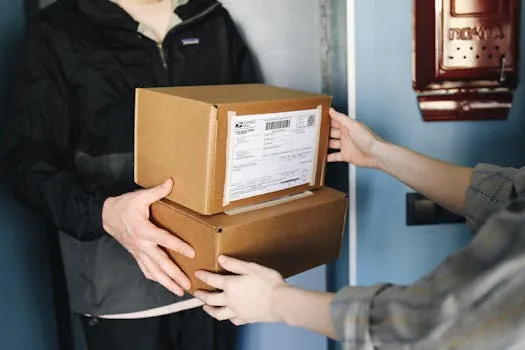
How Do You Build a Conversion-Ready Food Storefront?
Food ecommerce lives and dies on trust.
Quick Answer: How do you sell food online in Malaysia?
Solve delivery trust first. Food ecommerce grew 35%+ year-over-year in SEA, but most growth went to brands that nailed packaging and freshness communication. Show delivery method and shelf life on every product page. First-order guarantees lift conversion by 15-25%. Then focus on repeat purchase — that is where F&B profitability lives. Your storefront must answer three questions immediately:
"What am I getting?"
- Product photography that shows actual portion size, packaging, and contents. Not just styled hero shots — show the real product in real packaging.
- Clear ingredient lists with allergen callouts (nuts, gluten, dairy). In SEA, halal status must be immediately visible.
- Weight, serving size, and nutritional information where applicable. Don't make buyers hunt for basics.
"Will it arrive fresh?"
- Delivery method and packaging visible on every product page. "Ships in insulated packaging with ice packs" or "Ambient shelf-stable, no cold chain needed."
- Delivery windows by region. "Klang Valley: next-day delivery. East Malaysia: 3-5 days."
- Shelf life and storage instructions. "Best consumed within 3 days of delivery. Store refrigerated."
"What if I don't like it?"
- Return/refund policy for food is tricky but necessary. "If your order arrives damaged or not as described, we'll replace it or refund within 48 hours" removes the risk.
- First-order guarantees ("Not satisfied with your first order? Full refund, no questions") can dramatically improve initial conversion — brands that offer first-order guarantees see 15-25% higher initial conversion rates.
But trust on the product page is only half the battle. The checkout flow is where food stores lose the most money.
Platform choice:
- Shopify handles F&B well with apps for delivery scheduling, subscription management, and inventory with expiry tracking.
- For Shopify setup in Malaysia or Singapore, see those service guides.
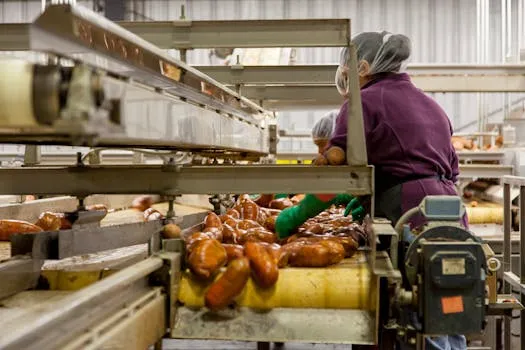
How Do You Fix Checkout Confidence Before Scaling?
The gap between "added to cart" and "purchased" is where F&B stores lose the most money:
Delivery scheduling:
- Let buyers choose delivery date and time slot where possible. "I want this delivered Saturday morning" is a common F&B requirement.
- Show estimated delivery date on the product page — not just at checkout. "Order by 2pm for next-day delivery" creates urgency and confidence.
Payment and trust:
- Display all available payment methods near the buy button. FPX, GrabPay, Touch 'n Go for Malaysia. PayNow, credit cards for Singapore.
- "Cash on delivery" option for Malaysia can significantly improve first-order conversion for new food brands without established trust.
- Security badges and SSL indicators matter more for food — buyers are trusting you with something they'll put in their body.
Minimum order and bundling:
- If you have minimum order requirements for cold chain logistics, make this clear upfront — not as a surprise at checkout.
- Bundle products to increase AOV while meeting delivery minimums. "Build your box" functionality works well for F&B.
With your storefront and checkout working together, the next question is where Malaysia and Singapore actually differ in execution.
Does this sound like your store? Find out where you're leaking revenue — take the free Revenue Score. 3 minutes. Free. No pitch.
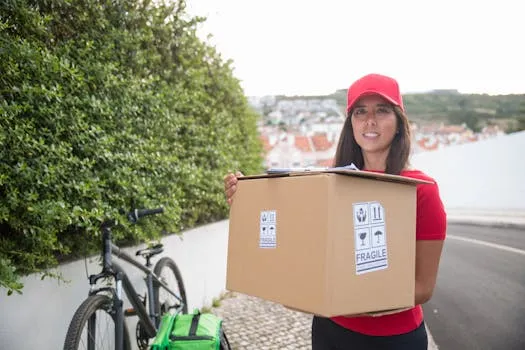
How Do Malaysia and Singapore Differ in Execution?
One system, two markets. Adjust where it changes outcomes:
| Factor | Malaysia | Singapore |
|---|---|---|
| Halal certification | Essential for mainstream adoption — display JAKIM certification prominently | Important but less decisive than in Malaysia |
| Delivery logistics | Klang Valley has good infrastructure; Sabah/Sarawak need separate fulfilment planning | Same-day or next-day expected for fresh food |
| Price sensitivity | Higher — show per-unit pricing, bundle savings, subscription discounts | Lower — premium positioning outperforms discount messaging |
| Payment & trust | FPX, GrabPay, TnG, COD for first orders | PayNow, credit cards; Grab delivery integration expected |
| Regulatory | MESTI certification, Halal (JAKIM) | SFA (Singapore Food Agency) licensing required |
What Does a 90-Day Execution Sequence Look Like?
- Days 1-14: Audit with the scorecard. Identify top conversion leaks — usually delivery clarity, product trust, or checkout friction. Fix the top 3.
- Days 15-45: Improve product pages with freshness info, delivery windows, and packaging details. Set up review collection and post-purchase email flows.
- Days 46-90: Scale channels only after first-order conversion stabilizes. If your conversion rate still needs work, our guide to boosting ecommerce conversion rates covers the highest-impact fixes. For F&B, focus on repeat purchase rate as your primary growth metric — acquiring the first order is the expensive part, retention is the eCommerce growth pyramid in action.

Why Is Review Collection the Trust Engine for Food?
Nobody risks a bad meal.
Food has a higher trust barrier than any other ecommerce category. Clothes can be returned. Electronics have warranties. But a disappointing meal is just gone — along with the customer's willingness to reorder.
Active review collection is not optional for F&B brands. It is your trust infrastructure.
Here is the sequence we use with every food brand we work with:
Day 2 post-delivery: first ask. The product is still fresh in the customer's mind. Send a short email or WhatsApp message: "How was your [product name]? Leave a quick review." No long surveys. One tap to a review form.
Day 7: follow-up with photo incentive. "Share a photo of your meal for 15% off your next order." Photo reviews convert browsers at 2-3x the rate of text-only reviews. They show real people eating real food — that is the trust signal no product page copy can replicate.
In Malaysia, we find customers leave reviews 40% more often when asked via WhatsApp compared to email. WhatsApp feels personal. Email feels like marketing. Use both, but lead with WhatsApp for your Malaysian audience.
Display review count prominently on every product page. Not buried in a tab — visible near the buy button. Aim for 20+ reviews per SKU before you scale ad spend. Below that threshold, you are paying to send traffic to a page that does not convert.
How Do You Handle Cold Chain and Packaging?
This kills more F&B stores than bad marketing.
The number one operational failure for online food brands in Malaysia and Singapore is packaging logistics. Your product tastes great in your kitchen. The question is whether it tastes great after 18 hours in a delivery van.
Same-day and next-day within city: Insulated boxes with gel packs work. For Klang Valley and Singapore, this covers most of your orders. Keep it simple and reliable.
Malaysia logistics partners: Lalamove for same-day within KL. J&T Express or Ninja Van for ambient shelf-stable products going nationwide. For frozen items outside the Klang Valley, you need a dedicated cold chain partner — standard couriers will not maintain temperature.
Singapore logistics partners: Ninja Van cold chain handles chilled and frozen deliveries well. Aramex fresh logistics is another option for temperature-sensitive SKUs. Singapore's small geography is an advantage — use it to guarantee same-day fresh delivery as a competitive edge.
Build packaging cost into your product price. We see brands absorb RM3-5 per order in packaging costs to keep prices "competitive." That is a losing game. Customers expect proper food packaging. Price it in.
Test your own packaging. Order your own product. Ship it to yourself using the same courier your customers use. If it arrives warm, your customers' products arrive warm too. We run this test quarterly with every F&B client. It catches problems before one-star reviews do.
How Does Recipe Content Drive Reorders?
Your product is not the end. It is an ingredient.
Most F&B brands sell a product and hope the customer comes back. Smart brands build a consumption system that makes coming back inevitable.
Include recipe cards in packaging. Physical cards with 2-3 recipes using the product. This costs almost nothing and gives the customer immediate ideas beyond the obvious use case. A sambal brand is not just selling sambal — they are selling 15 different meals.
Build a recipe section on your store. Not a blog afterthought. A dedicated section with searchable recipes, each featuring your product. This also captures long-tail search traffic — "chicken rendang recipe with [brand] paste" is exactly how repeat buyers search.
Email a new recipe every 2 weeks. This is the reorder trigger most brands miss. A recipe email does three things: it reduces buyer's remorse ("I'm getting value from this purchase"), it increases consumption speed (faster use means faster reorder), and it gives customers a reason to open your emails that is not a discount code.
A sauce brand we worked with doubled their reorder rate by adding recipe emails to their post-purchase flow. No discounts. No urgency tactics. Just useful content that made people use the product faster.
This is retention without margin erosion. Build it before you scale acquisition.
Leaking revenue you can't see? The free Revenue Score finds the gaps in under 3 minutes. No pitch. Just a score and a fix list.
Frequently Asked Questions
Do we need separate stores for Malaysia and Singapore?
No. One Shopify store with market-specific delivery zones, currency, and payment methods. Separate only if fulfilment logistics make it impractical.
How do we handle perishable food delivery?
Partner with temperature-controlled logistics providers. Show packaging method and delivery timeline on every product page. For high-perishable items, limit delivery radius and offer time-slot selection.
What's the most important metric for food ecommerce?
First-order to second-order rate. Food is a repeat-purchase category. If your first delivery is good, subscribers and reorders become your growth engine. If it's not, paid acquisition becomes a money pit.
Keep reading:
- Food & Beverage Marketing Strategy — Channel priorities, retention systems, and growth strategy for F&B brands.
- Food & Beverage Ecommerce — The full industry hub for F&B ecommerce in Malaysia and Singapore.
- Shopify Malaysia — Launch and grow your Shopify store in Malaysia.
- Shopify Singapore — Shopify setup, optimisation, and growth in Singapore.
- Common eCommerce Development FAQs Answered
WebMedic helps F&B brands build, launch, and grow on Shopify. Get your free store score →
Ready to grow?
Find out exactly where your store is leaking revenue.
Answer a quick set of multiple-choice questions and we'll pinpoint your biggest revenue leaks — and whether we can help plug them.
Find Your Revenue LeaksFree · No obligation · 2 minutes