Is your store leaking revenue?
Find out exactly where you're losing sales — takes 2 minutes.
A broadcast list is an audience. A community is a room where customers talk to each other, even when you are not there.

What Is a Brand Community?
Most brands have an audience, not a community.
A brand community is a group of customers who connect with each other around a shared interest in a brand, not only with the brand itself. Marketing researchers Albert Muniz and Thomas O'Guinn described it in a 2001 Journal of Consumer Research paper as brand admirers, not tied to one place, held together by social relationships.
The words that matter are each other. A newsletter connects you to customers. A community connects customers to one another.
For a DTC brand, that difference is the whole game. Ads buy the first order. Belonging gives a customer a reason to come back for the second.
We run conversion work for Shopify brands, so we judge community with one test: does it change what a customer does after order one? This guide is written for stores in Malaysia and Singapore, where the realistic platforms are WhatsApp, Telegram and Facebook groups, not Discord.
One principle runs through everything below. Community is an experience. If you treat it as a marketing channel, members will treat it like one.
But first, why bother?
Why Does a Brand Community Matter for a DTC Brand?
Because the first sale is the expensive one.
Depending on the study, acquiring a new customer costs 5 to 25 times more than keeping an existing one, according to Harvard Business Review. Bain & Company's Frederick Reichheld found that raising retention by 5% can lift profits by 25% to 95%. A brand community is one way to earn that retention.
Belonging gives customers 4 things. Each one shows up as a thought in the customer's head:
- Identity: "This feels like me."
- Validation: "Other people like me do this too."
- Support: "I am not doing this alone."
- Meaning: "This purchase fits my values."
A discount delivers none of the four. A room full of people like them can deliver all four.
Academic research points the same way. A 2002 Journal of Marketing study by James McAlexander, John Schouten and Harold Koenig described a brand community as a web of 4 relationships: customer to brand, to company, to product, and to fellow customers. They argued loyalty is better understood as integration in that community than as repeat purchase alone.
The fourth relationship is the one a brand cannot create by broadcasting. It only exists if you build a place for it.
That matters for conversion. You can optimize a product page all week, but your ceiling is set by who comes back. Our customer retention funnel guide maps that ceiling, and what is customer retention covers the basics.
So does your WhatsApp list count?
Is a WhatsApp Broadcast List a Brand Community?
Probably not.
A WhatsApp broadcast list is an audience, not a brand community. It sits on the first of 3 rungs in WebMedic's belonging ladder: audience, community, membership. On a broadcast list, each reply lands in your private chat, so customers never see or talk to each other. Community begins when they do.
You send one message. Everyone on the list gets it. Every reply comes back to you alone.
That is a broadcast. It works for launches and restocks. It does not create belonging.

Belonging comes in 3 stages, and each one is worth more for retention than the last:
| Stage | What it is | Retention value |
|---|---|---|
| Audience | People consume your content | Weak. They can watch and leave without losing anything |
| Community | Members interact with each other around a shared interest | Medium. Interaction creates social value |
| Membership | People receive ongoing value, recognition and participation opportunities | Strong. Members get something they would miss if they left |
Source: WebMedic community framework.
The operating rule is simple. Do not stop at audience.
Telegram draws the same line in its product. Channels broadcast to unlimited audiences, while groups hold up to 200,000 members who reply to each other. A channel is the audience rung. A group is where community can start.
Here is the belonging check. Ask yourself: If the brand disappeared tomorrow, would members still want to talk to each other in the same place?
If the answer is no, you have an audience or a CRM list. That is fine. Just call it what it is.
A loyalty program does not fix this either. Points and tiers reward purchases. Membership rewards participation and gives people something they would miss. We cover the points mechanic in our ecommerce loyalty program guide. Here, we are after belonging.
How Do You Build a Brand World Members Want to Join?
Start with the role, not the platform.
A brand world gives customers a role to play, not just a product to buy. WebMedic's framework states that role in 1 sentence: the customer is becoming or expressing an identity alongside a type of people. Then 6 pillars make the role real: concept, codes, characters, setting, rituals and continuity.
Fill in this sentence: In this brand world, the customer is not just buying [product]. They are becoming or expressing [identity, role, standard, taste, progress or belonging cue] alongside [people or community type].
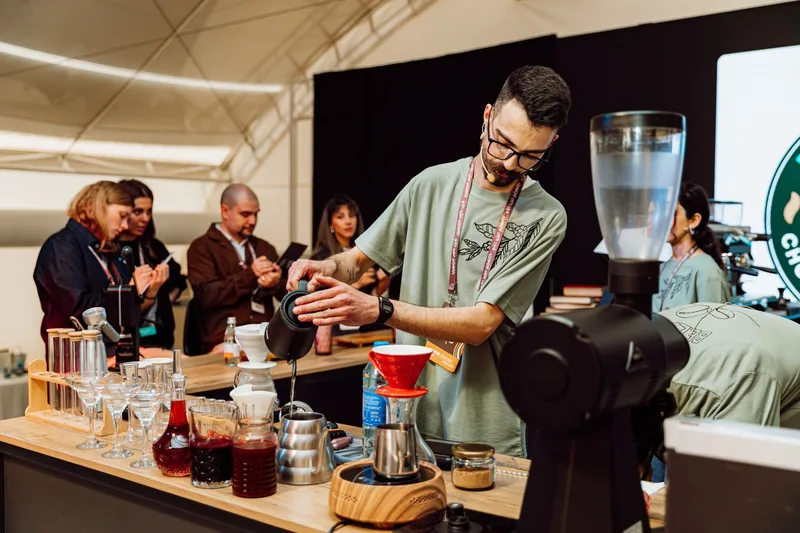
Take a hypothetical Kuala Lumpur specialty coffee brand. Its sentence might read: The customer is not just buying single-origin beans. They are becoming a home brewer with real taste, alongside other Klang Valley coffee fans who compare recipes every week.
Now build the world around that role with 6 pillars:
- Concept: the idea at the center of the brand.
- Codes: the visual and verbal cues people learn to recognize.
- Characters: the people who make the world feel lived in, such as founders, customers and hosts.
- Setting: where the world feels like it happens, online or offline.
- Rituals: repeatable acts that let customers take part, not just watch.
- Continuity: the same feel across email, product pages, packaging and support.
The pass rule is blunt. If any pillar is blank, you are not ready to build a community around the world yet. Fix the world first, and start with our guide to ecommerce brand building if your identity work is thin.
Aimé Leon Dore, which runs Cafe Leon Dore as a place fans can visit, shows how much a setting does before any community platform exists.
Once the world is clear, you can pick a shape for the community.
Which Brand Community Model Fits Your Product?
Match the model to why customers return.
WebMedic's framework sorts brand communities into 4 models: progress, interest, values and access. The rule is to pick the model that matches the member's strongest reason to return. If 2 models fit, choose 1 primary model and 1 secondary mechanic, instead of launching all 4 on day one and diluting the room.
| Members come back to... | Model | The promise | Fits |
|---|---|---|---|
| Stay consistent, improve, track wins | Progress community | "We help you keep going and get better." | Fitness, wellness, food, learning |
| Learn, compare, recommend, discuss the category | Interest community | "We help you go deeper with people who care too." | Coffee, cooking, outdoors, skincare routines |
| Express beliefs, standards, mission, identity | Values community | "We gather people who live by the same principle." | Mission-led, craft and culture brands |
| Get closer to the brand, drops, founder, product process | Access community | "We bring you inside before everyone else." | Drops, limited lines, collaborations |
Source: WebMedic community framework.
Choose on behavior, not fashion. Watch what your customers already do with the product.
Our hypothetical coffee brand is an interest community. Its customers compare grind sizes and swap recipes. The secondary mechanic could be early access to small-batch roasts.
One distinction trips brands up. An access community is a reason members return. Access perks are a way to earn revenue. An early-access email to your list is a perk, not a community model.
Two errors to avoid: picking the platform before the member behavior, and running an interest community with only brand posts. Add member recommendations, setups and help threads instead.
Not sure where your store leaks repeat revenue? Find out where you stand. Take the free Revenue Score. 3 minutes. Free. No pitch.
Next question: where does the room live?
Which Platform Works for a Brand Community in Malaysia and Singapore?
Use the app your members already open.
For a Malaysian or Singaporean DTC brand, the practical first platforms are WhatsApp groups, Telegram groups and Facebook groups, which usually beat Discord or Circle. Telegram alone supports groups of up to 200,000 members, according to its FAQ. Pick 1 platform your team can run for at least 12 months, then add nothing until members use it.
| Platform | Best when | Watch out for |
|---|---|---|
| WhatsApp group | Members already live in the app and want fast, informal replies | Threads scroll away, so good answers are hard to find later |
| Telegram group | You want bigger rooms, pinned rules and admin tools | A channel is one-way, so add a group for member conversation |
| Facebook group | Your buyers are comfortable with thread-style discussion | Feels generic unless the brand world and rituals are strong |
| Email-first | The value is guidance, education or structured prompts | Member-to-member talk stays weak unless you design replies |
Sources: Telegram FAQ for group and channel limits. Other notes from WebMedic's community framework.
Momentum beats features. Commit to one platform for at least 12 months. If the room feels quiet, fix the purpose, the prompts and the rituals first. Moving to a new app does not fix a room with nothing to say.
Moderation across languages is the part teams forget. Customers in both markets often switch between English, Malay and Mandarin in one thread. Decide up front whether mixed-language replies are welcome. Pin the house rules in every language you use. Give each main language a moderator who speaks it natively.
One more rule: invite, never add. Adding a customer to a group without asking is the fastest way to turn belonging into spam.
How Do You Launch a Brand Community in 30 Days?
Start with 20 people, not 2,000.
Launch with 20 to 40 founding members, 1 platform and a 30-day prompt calendar built as 4 weekly loops. WebMedic recommends inviting repeat buyers, reviewers and customers who reply to emails, then running the same weekly rhythm for 60 days before changing the model, platform or cadence.
Who to invite. Pull from behavior, not a hunch:
- Shopify order history: customers with 2+ purchases or subscription continuity.
- Reviews: people who write detailed reviews or mention their routine.
- Email replies: customers who already talk back.
- Support tickets: people who ask thoughtful questions.
- Referrals: customers who already bring friends.
Prioritize people who both buy and participate. A big spender who never engages is less useful than a repeat buyer who answers, shares and helps.
How to invite. Send a personal message with 3 parts: why you chose them, what they get, and what you want from them.
What to post. Do not write 30 unrelated posts. Build 4 weekly loops that repeat the same jobs, so members learn what to expect:
- Monday: welcome and introductions.
- Tuesday: a win prompt, such as "What is one small win from this week?"
- Wednesday: a help thread, such as "Where are you stuck right now?"
- Thursday: a prompt specific to your model, such as recipes, routines or drop previews.
- Friday: member recognition or a note from the founder.
The pass rule: if a member cannot answer in under a minute, make the prompt more specific.

Then wait. The most common failure is posting for two weeks, seeing a quiet room and switching platforms. Run the rhythm for 60 days first.
How do you know it is working? Compare the repeat-purchase rate of members against a matched group of similar repeat buyers who did not join. Members were your best customers before they joined, so comparing them with everyone else flatters the community.
Once the room has energy, revenue becomes the next question.
How Do You Earn Revenue From a Community Without Peddling?
Sell last. Help first.
Earn revenue by making every offer improve a reason members already have to be there. The value-first rule sets the bar: if someone spends a month in the community and buys nothing, they should still feel glad they joined. Nielsen's 2012 survey of 28,000+ respondents found 92 percent trust recommendations from friends and family above all other advertising.
There are 5 revenue mechanics that fit a community:
- Access perks: first looks, early drops and private sessions, when there is real anticipation.
- Member bundles: offers built around a member goal, not a discount stack.
- Events: paid workshops, founder sessions and small meetups.
- Tiers: a free room with an optional paid level. Here, tiers mean levels of access, not points.
- Co-creation: concept votes, beta tests and naming input. Show members what changed.
Before you post any offer, run the member-motive fit check. Name the member motive the offer improves. If it improves none, do not post it as a community revenue moment.
A connection motive fits events and meetups. A progress motive fits workshops and guided bundles. Generic product pushes in every thread, or discounts unrelated to the member's goal, are the forced version.
The strongest sales moments often come from members, not the brand. Your job is to create the conditions: useful prompts, visible wins, thoughtful moderation and room for members to speak in their own words. Ask a member to share their routine and let others reply. That beats any polished broadcast.
Compare two bundles. Bad: "Here is a random discount stack." Good: "Here is the starter routine members recommend most for [specific goal]." The second one can only be written after the room has something to say.
Discounts are not banned. Frequency and timing matter. Do not use them as your default engagement tactic or before the community has value of its own. For your first revenue perk, pick a non-discount benefit.
Members who share results create content you can reuse with permission, the core of our UGC strategy guide. Members who bring friends do the work of a referral program before you formalize one.
Frequently Asked Questions
What is a brand community?
A brand community is a group of customers who connect with each other, not only with the brand, around a shared interest. Muniz and O'Guinn described the concept in a 2001 Journal of Consumer Research paper. For a DTC brand it can start small, with 20 to 40 founding members in one WhatsApp or Telegram group.
Is a WhatsApp group good enough for a brand community?
Yes, for a first room. A WhatsApp group lets members reply to each other, which a broadcast list cannot, and it asks nothing new of customers who already use the app. The trade-off is that threads scroll away, so post 1 weekly recap that pins the best answers.
How is a brand community different from a loyalty program?
A loyalty program rewards purchases with points, tiers or cashback. A brand community gives members a place to talk to each other and rewards participation, not only spend. The 2 can work together: tiers can be 1 of 5 community revenue mechanics, but points alone do not create belonging.
Does a brand community increase customer retention?
Research links community to loyalty. A 2002 Journal of Marketing study by McAlexander, Schouten and Koenig framed loyalty as integration in a brand community, and Bain's Frederick Reichheld found a 5% retention lift can raise profits 25% to 95%. Members self-select, so compare them against matched non-members before crediting the community.
Keep Reading

Free Download
We audited 10 Shopify stores doing $1M–$20M. Here are the 15 leaks every one had.
Real screenshots (names blurred). Most operators have 8 of the 15 and don't know it.
From 10 audits across SG, MY, AE — fashion, beauty, electronics, food.
PDF in your inbox in 30 seconds. 1 email. No follow-up unless you ask.