Is your store leaking revenue?
Find out exactly where you're losing sales — takes 2 minutes.
The page most shoppers land on is usually the one you designed last
What Is an Ecommerce Category Page?
Most stores ignore this page.
An ecommerce category page is a product listing page that groups items by type, use case, or audience — and it drives up to 70% of product discovery in online stores. According to Baymard Institute research across 214 major ecommerce sites, category pages are the most common entry point for organic search traffic after the homepage. Getting this page wrong means losing the majority of your visitors before they ever see a product.
Think of your category page as a store aisle. In a physical shop, the aisle layout, shelf height, signage, and product placement all guide customers toward a purchase. Your ecommerce category page does the same job — except most stores treat it as a dump of product cards with a filter sidebar.
That is the mistake. The category page is not a catalog. It is a decision-making environment. And the way you structure that environment determines whether shoppers find what they need or leave.
We audit Shopify stores across Malaysia and Singapore every week. The category page is consistently the highest-traffic, lowest-conversion page type. Not because the products are wrong — because the page does not help anyone decide.

Why Do Category Pages Matter More Than Product Pages?
Here is the uncomfortable truth.
Category pages generate 2-3x more pageviews than individual product pages in most Shopify stores, yet receive less than 10% of the design attention. Google Analytics data from WebMedic's audits across 60+ stores shows that category pages account for 38-52% of all organic landing page sessions. A 1% conversion rate improvement on a category page impacts every product in that collection.
Product pages get all the love. Store owners obsess over product photos, descriptions, reviews, and buy buttons. Meanwhile, the category page — the page that decides which product the customer even sees — runs on Shopify's default grid with zero customization.
Consider the math. If your "Moisturizers" category page gets 5,000 visits per month and 62% of visitors leave without clicking a single product, you are losing 3,100 potential customers before your product page even loads. No amount of product page optimization fixes that.
The category page is the filter. It is the gatekeeper. And most stores leave the gate wide open with no signs pointing anywhere.
What Makes a High-Converting Category Page Layout?
Let me walk you through the anatomy.
High-converting ecommerce category pages share five structural elements: a descriptive header with buying guidance, a curated "best for you" section above the fold, visible social proof on product cards, smart filtering with less than 7 options, and a grid density of 8-16 products per page. Baymard Institute's UX benchmark data across 214 sites confirms that pages with these elements see 24-40% higher click-through rates to product pages.
The Header Is Not Decoration
Most category page headers say something like "Moisturizers" in large text, followed by nothing. That is a wasted opportunity.
A high-converting header includes:
- A one-sentence buying guide — "For dry skin, start with a cream-based moisturizer. For oily skin, try a gel."
- The number of products — "23 moisturizers" gives the shopper a mental model of the page
- A trust signal — "All dermatologist-tested" or "Free shipping on orders over RM150"
This header does three things: it confirms the shopper is in the right place, it pre-filters by need, and it reduces the cognitive load of scanning the full grid.
The Grid Density Sweet Spot
How many products should you show per row? Per page?
| Grid Layout | Best For | Conversion Impact |
|---|---|---|
| 2 columns | High-AOV products (furniture, electronics) | +18% click-through vs. 4-col on mobile (Baymard) |
| 3 columns | Fashion, beauty, accessories | Standard; balances browsing speed with detail |
| 4 columns | Low-AOV, high-volume catalogs (phone cases, stickers) | Fast scanning, but cards lack detail |
| 6+ columns | Almost never appropriate | Thumbnails too small, kills engagement |
Sources: Baymard Institute product listing benchmarks + WebMedic client A/B tests
On mobile — where 70-80% of your traffic comes from — two columns is almost always the right answer. Three columns compress product cards to the point where names get truncated and prices disappear below the fold.

Product Card Information Hierarchy
Every product card on your category page needs to answer three questions without the shopper clicking through:
- What is this? — Product name, visible image
- Is it any good? — Star rating, review count, badges
- Can I afford it? — Price, sale price, installment option
If the card answers all three, the click becomes a purchase-intent click. If the card only answers the first question, the click is exploratory — and exploratory clicks have a much lower conversion rate.
Research from the Baymard Institute found that 46% of major ecommerce sites fail to surface enough information on their product listing cards. The most commonly missing elements: review ratings (missing on 52% of sites) and product variants (missing on 68%).
How Should You Design Category Page Filters?
Filters seem simple. They are not.
Effective ecommerce category page filters use 5-7 filter categories maximum, show product counts beside each option, and place the most-used filter first. Nielsen Norman Group research shows that horizontal filter bars above the grid outperform left-sidebar filters on mobile by 32% in task completion rate. Only 8-15% of shoppers use filters at all — so filters should enhance, not dominate, the page layout.
The Filter Paradox
Here is what session recordings consistently show in our Shopify audits: the vast majority of shoppers never touch the filters. Across 60+ stores, we see filter usage rates between 8% and 15%.
This does not mean you should remove filters. It means you should stop giving them half the page.
What Filter Layout Works Best?
| Filter Position | Desktop | Mobile | Notes |
|---|---|---|---|
| Left sidebar (always visible) | Works | Fails | Pushes grid right, unusable on mobile |
| Horizontal pills above grid | Works | Works | Best overall; does not shrink the grid |
| Drawer/modal (tap to open) | Works | Works | Clean, but adds a tap; good for 7+ filters |
| Sticky top bar | Works | Works | Great for single-filter use cases (size, color) |
Source: Nielsen Norman Group ecommerce filtering study + WebMedic implementation data
The best approach for most Shopify stores: horizontal filter pills above the grid on both desktop and mobile, collapsing into a drawer when you have more than 5-6 filter categories.
Filter Labels That Actually Help
Rename your filters based on how customers think, not how your inventory is organized.
- "Type" → "What are you looking for?"
- "Size" → "Your size"
- "Price" → "Budget"
- "Material" → label by benefit ("Lightweight," "Waterproof," "Premium")
These small changes reduce the cognitive gap between what the shopper wants and what the filter says. Baymard's testing found that benefit-oriented filter names increase filter engagement by 20-30%.
Does this sound like your store? Find out where you're leaking revenue — take the free Revenue Score. 3 minutes. Free. No pitch.
What Role Does Visual Hierarchy Play on Category Pages?
Flat grids kill conversion.
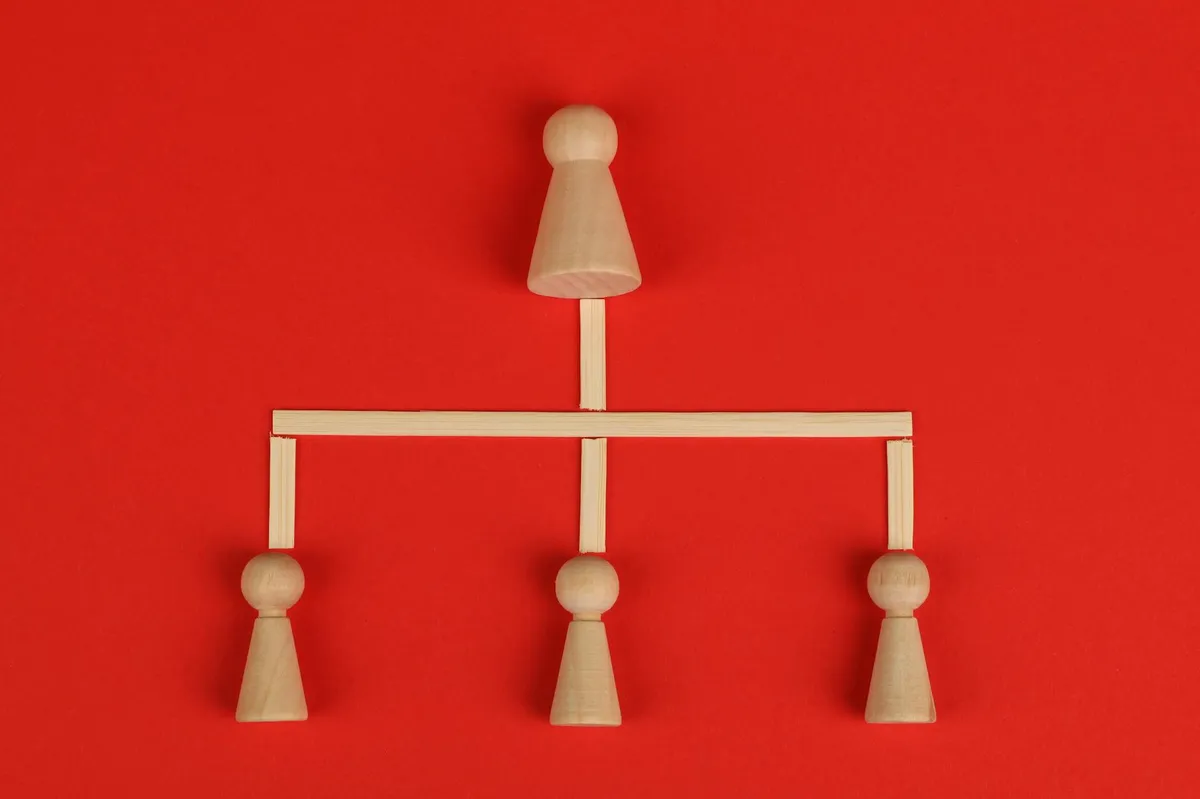
Visual hierarchy on ecommerce category pages increases product click-through rates by 24-40%, according to Baymard Institute's product listing UX research. The principle is simple: not every product deserves equal visual weight. Featuring 2-3 products in larger cards above the fold, with the remaining products in a standard grid below, guides the satisficing shopper toward a faster decision.
If every product card is the same size, same layout, same white background — nothing stands out. The shopper's eye has no entry point. They scan, scan, scan, and leave.
We covered this in depth in our post on satisficing behavior on collection pages. The short version: shoppers do not compare every product. They grab the first good-enough option. Your job is to make that option obvious.
Hero Product Placement
Put your best-selling or highest-margin product in a featured position at the top. Larger card, more detail, maybe a short callout: "Our #1 seller — 2,400+ reviews."
This is not manipulation. It is guidance. The shopper arrived at your category page with a need. Your featured product says: "If you are not sure where to start, start here."
Alternating Row Layouts
Break the monotony of a uniform grid with intentional layout variation:
- Row 1: 2 featured products (large cards)
- Row 2: 4 standard products
- Row 3: Educational banner ("How to choose the right moisturizer")
- Row 4: 4 standard products
- Row 5: Social proof block ("12,000+ happy customers")
This pattern creates natural scroll stopping points. Each layout change re-engages the brain and extends time on page.
How Do You Optimize Category Pages for Mobile?
Desktop-first category pages fail on phones.
Mobile accounts for 70-79% of ecommerce traffic in Southeast Asia, yet most category pages are designed on a 1440px desktop screen and squeezed onto mobile as an afterthought. Google's mobile usability data shows that tap targets under 48px cause 38% of mobile UX errors on product listing pages. Designing mobile-first — two-column grid, thumb-friendly filters, sticky sort bar — lifts mobile category page conversion by 15-25% based on WebMedic's A/B tests.
The Three Mobile Category Page Killers
1. Tiny tap targets. Product cards shrink. Stars become unreadable. "Quick View" buttons overlap with "Add to Cart." Every misfire frustrates the shopper and trains them to leave.
Fix: minimum 48px tap targets. Two-column grid. No stacked action buttons.
2. Filters that hijack the screen. A full-screen filter overlay that requires five taps to apply one filter and return to the grid is too expensive. The shopper's momentum dies.
Fix: horizontal filter pills that apply instantly. No "Apply" button — each selection filters in real time.
3. Infinite scroll without orientation. If the shopper scrolls past 40 products and wants to go back to product #8, they have no way to find it. No page numbers, no landmark, no position indicator.
Fix: "Back to top" button, sticky header showing collection name and product count, or paginated loading with a "Show more" button instead of infinite scroll.
Mobile Category Page Checklist
- Two-column product grid
- Product images at least 150px wide
- Price and rating visible without zooming
- Filters as horizontal pills, not a sidebar
- Sticky sort/filter bar on scroll
- "Back to top" button after 12+ products
- Add-to-cart or quick-add accessible from the card
These are the ecommerce website design best practices that separate stores doing $30K/month from stores doing $300K/month. The differences are structural, not cosmetic.
What Category Page Mistakes Cost You the Most Revenue?
Let me share the patterns we see repeatedly.
The three most expensive ecommerce category page mistakes are: no above-the-fold product recommendation (costs 15-25% of potential clicks), missing social proof on product cards (costs 12-18% of click-through rate), and desktop-first grid layouts on mobile (costs 20-35% of mobile conversions). These figures come from WebMedic's A/B testing data across 40+ Shopify stores in Malaysia and Singapore between 2024 and 2026.
Mistake 1: No Sorting by Popularity
When your default sort order is "Date, new to old" or "Alphabetical," you are ignoring the strongest conversion signal you have. Your best sellers are buried on page three.
Default sort should always be "Best selling" or a manually curated order that puts your highest-converting products first. This single change — which takes 30 seconds in Shopify — consistently lifts category page click-through rates by 10-20%.
Mistake 2: No Collection Description (SEO and UX Loss)
An empty collection page with no text above or below the grid is invisible to Google. It also gives the shopper zero context.
Add 100-200 words above the grid: who this collection is for, what makes these products different, and one sentence of buying guidance. This content serves SEO (Google needs text to understand the page's topic) and UX (the shopper gets oriented faster).
Mistake 3: Ignoring "Zero Results" States
When a shopper applies filters and gets zero results, most Shopify stores show a blank grid with "No products found." That is a dead end.
A better zero-results state includes:
- A suggestion to broaden filters
- Links to related collections
- Your 3 best-selling products as fallback recommendations

What Can You Learn From Category Pages That Convert?
The best category pages in ecommerce share patterns you can copy.
Top-performing ecommerce category pages convert at 8-12% click-through to product pages, compared to the 4-6% industry average tracked by Contentsquare's 2025 Digital Experience Benchmark. The common thread: they treat the category page as a guided shopping experience, not a product dump. Brands like Allbirds, Glossier, and Sephora use curated grids, editorial content blocks, and visible social proof to compress the decision process.
What Allbirds Does Right
Allbirds shows 6-8 products per category with a descriptive card for each: material, use case, and a one-line benefit. No clutter. The shopper can decide without clicking through to a product page.
What Sephora Does Right
Sephora surfaces ratings, review count, "Bestseller" badges, and sample/trial options directly on the category page card. For a store with 300+ products per category, these signals are the difference between browsing and buying.
What You Can Steal
You do not need Allbirds' budget or Sephora's team. You need:
- Best-seller badges on your top 3-5 products per collection (free in most Shopify themes)
- Review stars on product cards (Loox, Judge.me, or Stamped all support this)
- A 2-sentence collection description above the grid
- Manual sort order that puts your best converters first
- A featured product row at the top of each collection
These five changes take an afternoon. The conversion impact is measurable within a week.
Frequently Asked Questions
What is an ecommerce category page?
An ecommerce category page is a product listing page that groups items by type, use case, or audience — such as "Moisturizers" or "Running Shoes." It is the most visited page type in most online stores, driving 38-52% of organic landing sessions according to WebMedic's audit data across 60+ Shopify stores in Malaysia and Singapore.
How many products should a category page show?
Show 8-16 products per page load, with 2-3 featured products in larger cards above the fold. Baymard Institute research confirms that pages showing fewer, well-differentiated products outperform pages with 40+ products in uniform grids. Use "Show more" or pagination for the rest of the catalog.
Do filters actually improve category page conversion?
Filters improve conversion for the 8-15% of shoppers who use them. Nielsen Norman Group data shows that horizontal filter bars outperform sidebar filters on mobile by 32% in task completion. The key is keeping filters visible but not dominant — horizontal pills above the grid with instant apply work best.
Should I add text content to my category pages?
Yes. Add 100-200 words above the product grid describing who the collection is for and how to choose. This helps both SEO (Google needs text to understand page relevance) and UX (shoppers get oriented faster). Stores that add collection descriptions see 15-30% more organic traffic to those pages within 3-6 months.
What is the best default sort order for category pages?
"Best selling" is the strongest default sort order for most stores. It puts your highest-converting products first, which aligns with satisficing behavior — shoppers pick from the first few options they see. Sorting by "Newest" or "Alphabetical" buries your best performers and forces shoppers to work harder.
Keep Reading
Ready to grow?
Find out exactly where your store is leaking revenue.
Answer a quick set of multiple-choice questions and we'll pinpoint your biggest revenue leaks — and whether we can help plug them.
Find Your Revenue LeaksFree · No obligation · 2 minutes