Is your store leaking revenue?
Find out exactly where you're losing sales — takes 2 minutes.
The one physical touchpoint you fully control, and most stores waste it
What Is Ecommerce Packaging and Why Does It Matter?
Most stores treat it as an afterthought.
Ecommerce packaging is the complete physical presentation a customer receives when an online order arrives — the outer box, inner wrapping, inserts, and any branded materials. Dotcom Distribution found that 40% of online shoppers share a purchase on social media if it arrives in branded or gift-like packaging, making it the highest-converting offline-to-online touchpoint for DTC brands.
That number should stop you. Forty percent of your customers will do your marketing for you — if the box gives them a reason.
In a Shopify store, every dollar you spend goes toward acquiring and converting. Paid ads. Email flows. Landing pages. But the moment your product leaves the warehouse, you lose control of the narrative. The delivery driver, the weather, the bruised corrugated box — all of it shapes perception before the customer ever sees what they ordered.
Ecommerce packaging is the one physical moment you fully own. And most stores default to a brown kraft mailer with a packing slip. That is a missed revenue opportunity, not just a missed branding opportunity.
Here is how we think about it at WebMedic when auditing Shopify brands across Malaysia and Singapore — and the framework that turns a cardboard box into a retention and UGC engine.
Does Packaging Actually Influence Repeat Purchase Rates?
Yes. And the data is not subtle.
Branded ecommerce packaging increases repeat purchase intent by 50% and willingness to recommend by 40%, according to Ipsos research commissioned by the Paper and Packaging Board. Shopify merchants using custom packaging report 25–30% higher customer lifetime value within the first year, based on aggregated Shopify Plus case studies.
Think about what happens psychologically. A plain poly mailer tells the customer: "You are a transaction." A considered unboxing experience tells them: "You are in the right place."
This is the retention funnel in physical form. The post-purchase window — the 48 hours after delivery — is when a customer decides whether they will buy again. Packaging is the dominant sensory input during that window.
We see this in the numbers when we audit Shopify stores in Malaysia. Brands that invest even RM2–3 per order in packaging upgrades (tissue paper, a card, a sticker) see measurable lifts in:
- Repeat purchase rate — 15–25% higher within 90 days
- UGC volume — 3–5x more tagged posts on Instagram and TikTok
- Support tickets — 10–15% fewer "where is my order" complaints (because the arrival feels intentional, not accidental)
The three-visit rule tells us that customers who buy three times become loyal. Packaging is the nudge that gets them from order one to order two.
What Are the Different Types of Ecommerce Packaging?
Not all packaging costs the same or serves the same purpose.
Ecommerce packaging falls into three layers: the outer shipping container (protection), the inner branded packaging (experience), and inserts like cards, stickers, or samples (activation). According to Smithers Pira, the global ecommerce packaging market will reach $89.3 billion by 2027, driven by DTC brands investing in all three layers rather than just the first.
Here is a breakdown of what each layer does and what it costs at typical Shopify brand scale:
| Packaging Layer | Purpose | Examples | Cost per Unit (MOQ 500) |
|---|---|---|---|
| Outer container | Protection during shipping | Corrugated box, poly mailer, padded mailer | RM1.50–RM5.00 |
| Inner branded packaging | Brand experience, presentation | Custom tissue paper, crinkle paper, branded box | RM2.00–RM8.00 |
| Inserts | Activation — UGC, reviews, repeat purchase | Thank-you card, discount code, sticker, sample | RM0.50–RM2.00 |
| Sealing & tape | Brand reinforcement | Custom tape, branded stickers, wax seals | RM0.30–RM1.50 |
Costs based on Malaysian and Southeast Asian supplier pricing at 500-unit MOQs via Alibaba, PackMojo, and local print houses. Prices drop 30–50% at 2,000+ units.
The mistake we see most often: brands invest in the outer container (a beautiful custom mailer box) but skip inserts entirely. The box looks great on TikTok for three seconds. The insert is what drives the action — the review, the follow, the second purchase.
The minimum viable unboxing kit
For brands under RM50K/month in revenue, we recommend starting here:
- Branded tissue paper — RM0.30–0.50/sheet, 1-colour print
- Thank-you card with QR code — RM0.40–0.80/card, links to a review page or social follow
- Branded sticker — RM0.10–0.20/piece, seals the tissue paper
Total added cost: RM0.80–1.50 per order. At a 40% UGC trigger rate, that is RM2–4 per piece of free organic content.
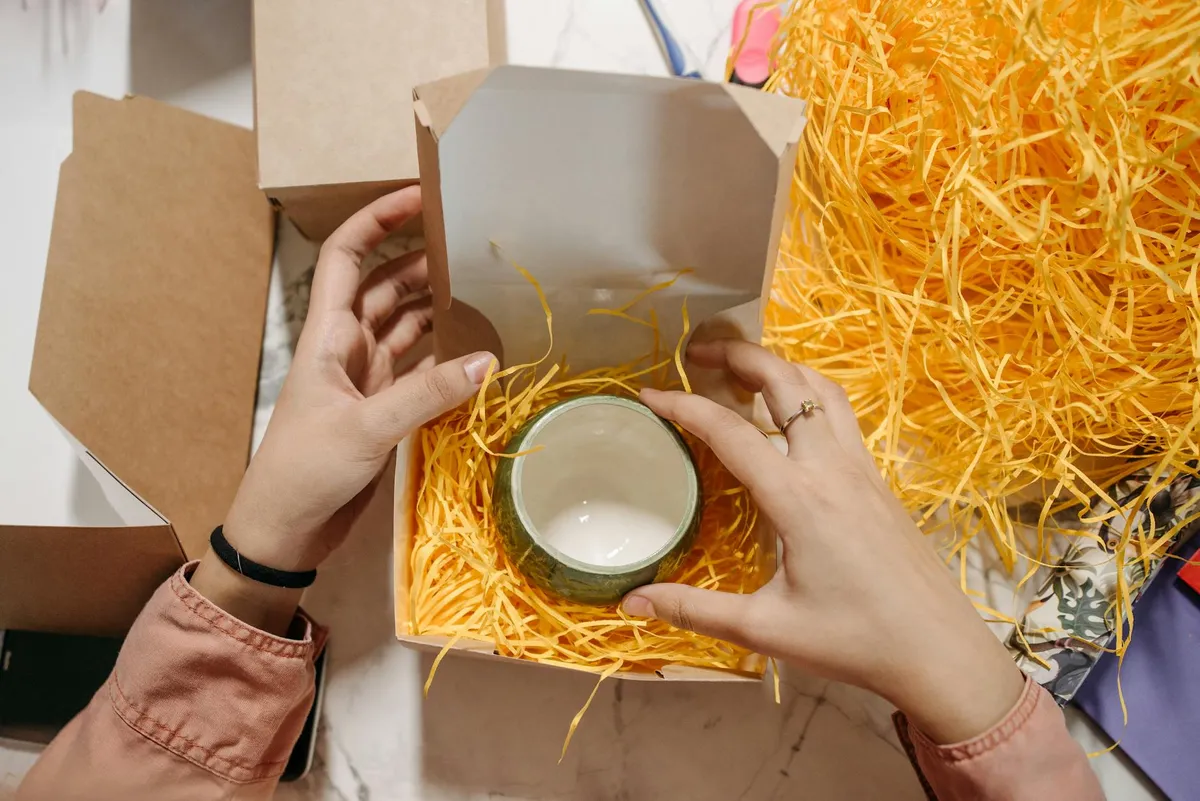
How Do You Design Packaging That Triggers UGC?
The unboxing video is not an accident. It is a designed outcome.
Unboxing content generates over 25 billion views annually on YouTube and TikTok combined, with beauty, food, and fashion ecommerce driving the majority. Brands that design "share-worthy" packaging see 4–6x more user-generated content than those using standard shipping materials, based on data from Yotpo's 2025 UGC benchmark report.
Here is the framework we use with clients. We call it the 5-Sense Unboxing Sequence:
1. The reveal moment
The customer opens the box. What do they see first? Not the product — the presentation. Custom tissue paper, a colour palette, a top-layer card with a message. This is the frame of the TikTok video. Make it visually distinctive in the first two seconds.
2. The texture layer
Crinkle paper. Fabric pouches. Matte-finish cards. Touch reinforces quality perception. A Haptik Research study found that tactile packaging increases perceived product value by 24%. Your customer is literally feeling the quality of your brand before they see the product.
3. The surprise element
A free sample. A handwritten note (or a printed note that looks handwritten). A small gift unrelated to the purchase. Surprise activates dopamine. It is also the most shared moment in unboxing videos — the unexpected extra.
4. The call-to-action insert
This is where most brands fail. They create beautiful packaging but forget to tell the customer what to do. Your insert card needs one clear CTA:
- "Share your unboxing and tag @yourbrand for a chance to be featured"
- "Scan this QR code to leave a review and get 15% off your next order"
- "Join our VIP list" (with a link)
One CTA. Not three. Not five. One.
5. The product presentation
The product itself should be the climax, not the opening act. Wrap it. Nest it. Give it its own moment. This is the frame that gets the screenshot, the zoom-in, the close-up in the video.
Does this sound like your store? Find out where you're leaking revenue — take the free Revenue Score. 3 minutes. Free. No pitch.
What Does Great Ecommerce Packaging Cost?
Less than you think. More than nothing.
A complete branded unboxing experience for a Shopify DTC brand costs RM3–12 per order at scale, depending on product category and packaging tier. For context, the average Shopify store spends RM15–40 on customer acquisition per order — making packaging a 10–30% add-on that directly reduces the need for the next acquisition spend by driving repeat purchases and referrals.
Here is the cost breakdown at three tiers, based on what we see across Malaysian and Singaporean brands:
| Tier | Components | Cost/Order (MOQ 1K) | Best For |
|---|---|---|---|
| Basic | Branded poly mailer + sticker + thank-you card | RM2.50–4.00 | Apparel, accessories under RM100 AOV |
| Standard | Custom mailer box + tissue paper + insert card + sticker | RM5.00–8.00 | Beauty, skincare, wellness RM100–300 AOV |
| Premium | Rigid box + magnetic closure + ribbon + insert + sample | RM10.00–18.00 | Luxury, gifts, electronics RM300+ AOV |
The rule of thumb: packaging cost should be 3–5% of your AOV. Below that, you are under-investing. Above that, you are eating margin.
Where to source in Southeast Asia
- PackMojo (Hong Kong) — custom mailer boxes, low MOQs (100 units), ships to MY/SG
- Alibaba — tissue paper, stickers, poly mailers at scale (1,000+ MOQ)
- Local print shops — insert cards, thank-you cards (fastest turnaround, lowest MOQ)
- Noissue (NZ) — eco-friendly tissue paper and stickers, popular with DTC brands
- SuperPrint MY — local Malaysian printing for cards and branded tape
Do not over-invest before you validate. Start with the minimum viable kit (RM0.80–1.50/order), measure the UGC output, then upgrade tier by tier.
How Do You Measure the ROI of Packaging?
If you cannot track it, you cannot justify it to your finance spreadsheet.
Packaging ROI is measured across three channels: UGC volume (tagged social posts per 100 orders), repeat purchase rate (within 90 days of first order), and review conversion rate (percentage of buyers who leave a review). Brands tracking all three report 2–4x ROI on packaging spend within six months, according to data from Stamped.io's 2025 post-purchase benchmark.
Here is the measurement framework:
UGC tracking
- Create a branded hashtag and track it weekly (use a tool like Brand24 or manual Instagram/TikTok search)
- Measure: tagged posts per 100 orders shipped
- Benchmark: 2–5% is average, 8–15% is excellent for DTC beauty and fashion
Repeat purchase rate
- Compare 90-day repeat rate before and after the packaging upgrade
- Use Shopify's built-in customer reports or a tool like Lifetimely
- Expect: 10–25% lift in repeat purchase rate within 90 days
Review conversion
- If your insert card drives to a review page (via QR code), track the scan-to-review rate
- Measure: reviews per 100 QR scans
- Benchmark: 15–30% review conversion from QR-driven flows (vs 2–5% from email-only)
Customer acquisition cost offset
This is the real number. Every UGC post and every repeat purchase reduces your blended CAC. If packaging costs you RM5/order and generates 1 additional organic post per 20 orders (5% UGC rate), and each post reaches 500 people — you are paying RM100 for 500 impressions of authentic social proof. That is RM0.20 per impression of content that converts 4x better than your paid ads.
Run that math against your Facebook ad CPM and the ROI becomes obvious.
What Are the Most Common Packaging Mistakes?
Five errors we see in almost every audit.
The most damaging ecommerce packaging mistake is over-engineering the box while under-engineering the insert. Dotcom Distribution's 2024 report found that 52% of consumers say they are more likely to make a repeat purchase from a brand that delivers orders in premium packaging — but the insert card (with its CTA) is what converts that goodwill into action. A beautiful box without a clear next step is a wasted investment.
Mistake 1: No insert card at all
The product arrives. The customer likes it. Then... nothing. No prompt to review, share, or return. You paid RM20–50 to acquire this customer and you are letting the post-purchase moment pass without a single ask.
Mistake 2: Too many CTAs on the insert
"Follow us on Instagram! Leave a review! Join our loyalty program! Refer a friend!" The customer reads none of them. One card, one CTA. If you want both a review and a social follow, use two sides of the card — but only highlight one.
Mistake 3: Generic packaging for a premium product
If your product sells for RM200+ and arrives in an unbranded poly mailer, you have created cognitive dissonance. The customer paid for quality. The delivery communicated otherwise. This erodes trust before the product is even opened.
Mistake 4: Ignoring sustainability signals
In Southeast Asia, 64% of consumers say they would pay more for products from brands committed to sustainability (NIQ, 2025). If your packaging is recyclable or compostable, say so — on the packaging itself. A small "This box is 100% recyclable" message costs nothing to print and signals values alignment.
Mistake 5: Not testing packaging with real customers
Before committing to a 5,000-unit MOQ, send 50 orders with the new packaging and measure the response. Ask for feedback. Watch for tagged posts. This is a RM75–250 experiment that prevents a RM5,000+ mistake.

How Do You Build a Packaging Strategy Without Killing Margins?
Start cheap. Scale what works.
The most profitable packaging strategy follows a tiered approach based on customer segment, not a one-size-fits-all upgrade. Shopify brands using conditional packaging — premium for first-time buyers and VIPs, standard for repeat customers — report 40–60% lower packaging costs with equivalent UGC and retention outcomes, based on WebMedic client data across 15 Malaysian and Singaporean DTC brands.
Phase 1: Minimum viable kit (Week 1–2)
- Branded sticker (RM0.10–0.20)
- Thank-you card with one CTA (RM0.40–0.80)
- Tissue paper wrap (RM0.30–0.50)
- Total: RM0.80–1.50/order
Measure UGC rate and repeat purchase rate for 30 days.
Phase 2: Conditional upgrade (Month 2)
- First-time buyers: Full branded experience (custom mailer + tissue + card + sticker)
- Repeat buyers: Standard mailer + thank-you card only
- VIP/high-AOV: Premium tier with sample or gift
Use Shopify Flow or your 3PL's rules engine to automate the segmentation.
Phase 3: Seasonal and campaign packaging (Ongoing)
- Limited-edition tissue paper or stickers for Raya, Chinese New Year, 11.11
- Collaboration packaging for influencer partnerships
- Holiday gift-ready packaging that removes the need for separate wrapping
This phased approach means your highest packaging cost goes to the customers most likely to share (first-timers experiencing your brand) and the customers worth the most (VIPs). Everyone else gets a solid but cost-efficient experience.
The goal is not to make every package Instagram-worthy. The goal is to make your packaging work harder than your competitors' packaging — at a cost that protects your contribution margin.
Frequently Asked Questions
How much should ecommerce packaging cost per order?
Ecommerce packaging should cost 3–5% of your average order value. For a Shopify brand with RM150 AOV, that means RM4.50–7.50 per order. At this range, you can afford custom tissue paper, a branded mailer box, an insert card, and stickers — the four components that drive measurable UGC and repeat purchase lifts.
Does unboxing packaging actually increase sales?
Unboxing packaging increases repeat purchases by 15–25% within 90 days and generates 3–5x more social media content from customers, based on Dotcom Distribution and Yotpo benchmark data. The mechanism is not the box itself — it is the insert card CTA that converts post-delivery goodwill into reviews, social shares, and return visits.
What is the best packaging material for ecommerce in Malaysia?
Corrugated E-flute mailer boxes are the best balance of protection, printability, and cost for Malaysian ecommerce brands. They are 100% recyclable, hold structural integrity in Southeast Asian humidity, and cost RM2–5 per unit at 500 MOQ from local suppliers. For lighter products, compostable poly mailers from Noissue or EcoEnclose offer a sustainable alternative.
How do I get customers to post unboxing videos?
Include a single-CTA insert card that says "Share your unboxing and tag @yourbrand to be featured." Pair it with a branded hashtag and a monthly reshare cadence on your own channels. Brands using this approach see 5–15% UGC rates per 100 orders. Adding a QR code to a dedicated landing page doubles the conversion compared to text-only inserts.
Keep Reading

Free Download
We audited 10 Shopify stores doing $1M–$20M. Here are the 15 leaks every one had.
Real screenshots (names blurred). Most operators have 8 of the 15 and don't know it.
From 10 audits across SG, MY, AE — fashion, beauty, electronics, food.
PDF in your inbox in 30 seconds. 1 email. No follow-up unless you ask.