Is your store leaking revenue?
Find out exactly where you're losing sales — takes 2 minutes.
Selling food online in Singapore means same-day freshness, SFA compliance, and checkout trust, not just more traffic.
Singapore wants food delivered yesterday.
That is only slightly an exaggeration. When we audit food and beverage stores targeting Singapore, the number one conversion killer is not price. It is not design. It is delivery speed ambiguity. Shoppers in Singapore expect to know exactly when their food arrives — and if the answer is not "today" or "tomorrow," they bounce.
If you want to sell food online in Singapore, you need three things working together: SFA compliance that builds trust, a checkout that removes friction, and logistics that match what Singaporean buyers already expect from RedMart and Amazon Fresh. Miss any one of those and you are paying for traffic that never converts.
This guide is the Singapore-specific execution sequence. If you sell into both markets, the Malaysia version covers that side. For broader strategy and retention systems, see the F&B marketing strategy for Singapore.
Start with a baseline: run your store through the free scorecard.
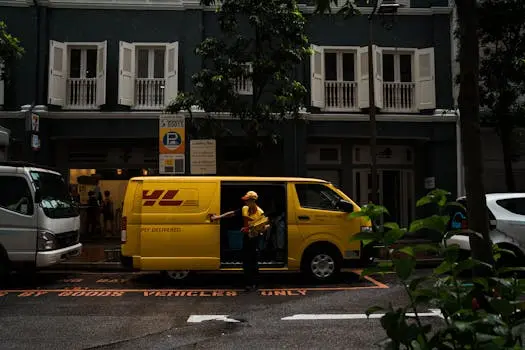
How Do You Build a Storefront for Singapore Food Buyers?
Singapore food shoppers are specific.
Quick Answer: How do you sell food online in Singapore?
Three things must work together: SFA licensing displayed on-site, same-day delivery capability, and PayNow/GrabPay checkout. Cart abandonment in Singapore food ecommerce runs 65-75%. Right-sized portions for small Singapore households can lift AOV by 18%. Get SFA compliance sorted before building your store — not after. They read labels. They check certifications. They compare with what they can get on FairPrice Online or Cold Storage in twenty minutes. Your storefront needs to answer their questions before they think to ask.
SFA licensing badge — front and centre.
The Singapore Food Agency regulates all food sold in Singapore, including online. If you are selling food products, you need an SFA food shop licence. Display the licence number on your homepage footer, About page, and ideally on product pages. This is not just legal compliance — it is a trust signal. Singaporean buyers know what SFA means. When they see it, they stop questioning whether your brand is legitimate.
For imported food products, you also need to be a registered importer with SFA. Every item must comply with Singapore's food labelling requirements under the Sale of Food Act.
Allergen and dietary transparency.
Singapore's food market is multi-ethnic. Chinese, Malay, Indian, Western expat — each with distinct dietary preferences and restrictions. Your product pages need:
- Full ingredient lists with allergen callouts (nuts, shellfish, gluten, dairy, soy)
- Halal certification status — not as critical as in Malaysia, but still matters for a significant portion of the market
- Vegetarian/vegan labelling where applicable
- Country of origin for imported ingredients
Do not bury this in a tab. Put it on the main product page, visible without clicking.
Portion sizing for Singapore households.
This is one the Malaysia post does not cover because it matters less there. Singapore living spaces are small. Fridges are small. Pantries are small. If you are selling bulk packs designed for Malaysian households, you will underperform in Singapore.
Right-sized portions — 2-person meal kits, single-serve snack packs, compact packaging that fits a 300-litre fridge — convert better in Singapore. We have seen brands increase AOV by 18% after introducing a "Singapore size" product line, because buyers stopped hesitating about storage.
Platform setup:
Shopify handles Singapore F&B well. For the full Shopify Singapore setup — payments, shipping zones, GST configuration — see that service guide.
How Do You Fix Checkout Confidence in Singapore?
Cart abandonment in Singapore food ecommerce runs 65-75%. The reasons are predictable and fixable.
Payment methods that Singaporeans actually use.
Credit cards are standard. But the payment methods that reduce friction for first-time buyers are:
- PayNow — Singapore's national QR payment system. Linked to NRIC or mobile number. Instant, trusted, zero fees for the buyer. If you are not offering PayNow, you are losing first-time food buyers who do not want to enter card details for an untested brand.
- GrabPay — High adoption, especially among 25-40 year olds. GrabPay users are already conditioned to buying food through their phone. Make this easy.
- NETS — Still used, especially for higher-value orders and by older demographics.
- Credit/debit cards — Visa, Mastercard, Amex. Standard but not sufficient alone.
Display all available payment methods near the buy button. Not just logos in the footer — near the actual purchase action.
Delivery scheduling and same-day expectations.
Here is where Singapore food ecommerce diverges sharply from every other market in Southeast Asia. Singapore is 730 square kilometres. There is no "East Malaysia" equivalent where delivery takes a week. Buyers know this. They expect speed.
For fresh and chilled products, same-day delivery is not a premium feature. It is the baseline expectation. If your competitors on RedMart deliver fresh groceries in 2 hours, "3-5 business days" on your checkout page is a conversion killer.
Build delivery scheduling into checkout:
- Time slot selection (morning, afternoon, evening)
- Same-day cutoff clearly displayed: "Order by 12pm for same-day delivery"
- Estimated delivery date visible on the product page — not buried in checkout
Minimum order thresholds.
Cold chain delivery in Singapore costs SGD 8-15 per order. If your average product is SGD 12, you need a minimum order or you are losing money on every delivery.
Be upfront about it. Show a progress bar: "Add SGD 15 more for free delivery." Bundle suggestions that hit the threshold. "Build your box" functionality works well for F&B — let buyers combine items to reach the minimum while feeling like they are customising, not being forced.
What SFA Licensing Do You Need?
This section exists because getting this wrong means you cannot legally sell. And we have seen brands invest months in their store only to discover they need licences they do not have.
SFA food shop licence.
Any business selling food in Singapore — online or offline — needs a food shop licence from SFA. This includes home-based food businesses. The application is done through GoBusiness and typically takes 2-4 weeks.
Requirements include:
- Registered business entity (sole proprietorship, partnership, or company)
- Premises that meet SFA hygiene standards (including home kitchens for home-based businesses)
- At least one food hygiene officer who has passed the WSQ Food Safety Course Level 1
- Food safety management plan
Food labelling requirements.
All pre-packaged food sold in Singapore must comply with the Food Regulations under the Sale of Food Act. Required label information includes:
- Product name
- Ingredient list (in descending order of proportion)
- Allergen declarations (the 8 major allergens)
- Net weight or volume
- Country of origin
- Name and address of the manufacturer, packer, or importer
- Best-before or use-by date
- Storage instructions
For health supplements and functional foods, additional requirements apply under the Health Supplements regulations.
Importing food into Singapore.
If you are importing food products to sell online, you need to be a registered food importer with SFA. Every consignment requires an import permit through TradeNet. Some categories — meat, seafood, fresh fruits and vegetables — have additional requirements including approved country-of-origin and accredited establishments.
This is where many brands coming from Malaysia get stuck. Having a successful food business in Malaysia does not automatically mean you can sell the same products in Singapore. The regulatory frameworks are different, and SFA enforcement is strict.
Practical advice: Get your licensing sorted before you build your store. Not after. We have worked with brands that launched, started acquiring customers, then had to pause operations for 6 weeks while sorting SFA compliance. That kills momentum and wastes ad spend. Once compliance is locked, our ecommerce development Singapore service handles the build so launch day does not get blocked on platform setup.
Does this sound like your store? Find out where you're leaking revenue — take the free Revenue Score. 3 minutes. Free. No pitch.
What Does a Singapore 90-Day Execution Look Like?
The Malaysia 90-day plan focuses on geographic logistics across a large country. Singapore's plan is different because the geography problem is solved — it is tiny. The challenge here is speed, trust, and standing out against well-funded marketplace competitors.
Days 1-14: Audit and compliance.
- Run your store through the scorecard. Identify your top 3 conversion leaks. For a broader checklist of fixes, see our guide to boosting ecommerce conversion rates.
- Verify SFA licensing is current and displayed on-site.
- Audit every product page for complete labelling information.
- Check that PayNow and GrabPay are active and visible at checkout.
- Test your own delivery: order your product and time it from checkout to doorstep. If it takes more than 24 hours for fresh items within Singapore, fix your logistics before anything else.
Days 15-30: Delivery infrastructure.
- Establish same-day delivery capability, at minimum for a defined cut-off time.
- Integrate delivery scheduling into checkout (Shopify apps like Zapiet or DingDoong handle this well).
- Set up SMS/WhatsApp delivery notifications. Singaporean buyers expect real-time tracking for food orders — they have been trained by Grab and foodpanda.
- Define and display your delivery zones. Singapore is small but not uniform. Sentosa, Jurong Island, and Changi areas may have different logistics considerations.
Days 31-60: Trust and review infrastructure.
- Launch post-purchase review collection. Day 2 after delivery: "How was your [product]?" Day 7: "Share a photo for 10% off your next order."
- Aim for 20+ reviews per SKU before scaling paid acquisition. Below that, your ad spend is sending traffic to pages that do not convert.
- Display aggregate ratings near the buy button, not in a separate tab.
- Set up a Google Business Profile if you have a physical location — even a registered office counts. Singapore buyers Google your brand name before buying food from you.
Days 61-90: Acquisition and retention.
- Now scale traffic. Not before. If conversion and AOV are healthy, you are ready to climb the eCommerce growth pyramid — acquisition comes after retention fundamentals are solid. Instagram and Facebook ads perform well for Singapore F&B — visual product, impulse-friendly price points.
- Launch a subscription option for consumable products. Singapore has strong subscription adoption for meal kits, supplements, coffee, and snacks. A 10% subscribe-and-save offer outperforms one-time discount codes for repeat purchase products.
- Set up a referral program. Singapore is a word-of-mouth market, especially for food. "Give SGD 10, get SGD 10" with a shareable link is simple and effective.
- Start building an email list segmented by purchase category. A customer who bought your laksa paste does not want emails about your granola.
How Do You Collect Reviews for Food in Singapore?
Trust is the currency. Reviews are how you earn it.
Singapore food buyers are research-oriented. Before they order from a new food brand, they check Google reviews, read Instagram comments, and look at the review section on your product page. A product page with zero reviews is a product page that does not convert — regardless of how good your photography is.
The sequence we run with every Singapore F&B brand:
Day 2 post-delivery: Send a WhatsApp message or SMS. Not email — open rates for transactional WhatsApp in Singapore run 85%+ compared to 20-30% for email. Keep it short: "Hi [name], how was your [product]? Tap here to leave a quick review."
Day 7: Follow up with a photo incentive. "Share a photo of your meal for 10% off your next order." Photo reviews are disproportionately valuable for food. They show real portions, real presentation, real settings. A product page with 30 photo reviews outperforms one with 100 text reviews.
Display strategy: Show review count and average rating directly on the product card in collection pages, not just on the product page. When a buyer is browsing your store, "4.8 stars (47 reviews)" on the thumbnail does more conversion work than anything else on the card.
One thing specific to Singapore: Google reviews matter more here than in Malaysia. Singaporean buyers search "[brand name] reviews" before purchasing. Make sure your Google Business Profile is active and that you are directing happy customers there as well as to your product pages.
Why Is Same-Day Delivery Singapore's Natural Advantage?
Singapore's size is your weapon. Use it.
In Malaysia, same-day delivery is a premium service limited to the Klang Valley. In Singapore, it is feasible for the entire country. This is a structural advantage that DTC food brands should exploit aggressively against marketplace competitors.
Logistics partners for Singapore food delivery:
- Lalamove SG — Best for same-day, on-demand delivery. Works well for fresh products where speed matters more than cost efficiency. Good for orders that need to arrive within hours.
- Ninja Van cold chain — Temperature-controlled delivery for chilled and frozen products. Reliable for next-day scheduled deliveries across Singapore.
- Aramex fresh logistics — Another option for temperature-sensitive SKUs. Better for consistent volume with scheduled routes.
- GrabExpress — Familiar to buyers, integrated with the Grab ecosystem. Works for ambient and short-distance chilled deliveries.
Packaging for Singapore's climate:
Singapore is hot and humid year-round. 30-32 degrees Celsius with 80%+ humidity is the default, not the exception. Your packaging must account for this.
Insulated mailer bags with gel ice packs handle most chilled products for same-day delivery. For frozen items, you need dry ice or dedicated cold chain logistics — gel packs alone will not maintain frozen temperatures in Singapore's heat beyond 2-3 hours.
Test every packaging configuration. Order your own product. Leave it on your doorstep for 30 minutes after delivery (because your customers might not be home immediately). If the product is still within safe temperature range, your packaging works. If not, upgrade before you scale.
Cost structure:
Same-day delivery in Singapore costs SGD 5-12 per order depending on the provider and urgency. For a food brand with an AOV of SGD 40-60, this is manageable — especially if you build a portion of the delivery cost into your product pricing and offer free delivery above a threshold (SGD 60-80 works well for most F&B brands).
Do not compete on free delivery for every order. Compete on speed and reliability. "Free same-day delivery on orders over SGD 60" is a stronger value proposition than "Free delivery on all orders (arriving in 3-5 days)."
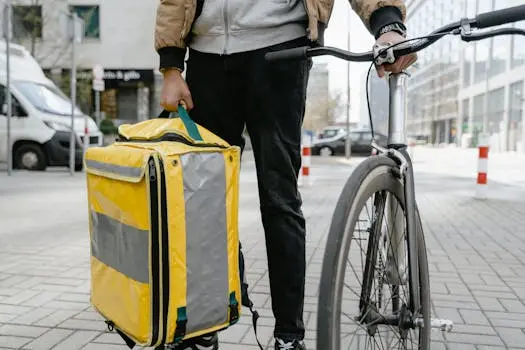
How Does Recipe Content Drive Reorders?
Your product is not the destination. It is the starting point.
The smartest F&B brands in Singapore do not just sell a product and hope the buyer comes back. They build a content system that makes the product part of the buyer's weekly routine.
Recipe cards in every delivery.
Physical recipe cards cost almost nothing to print and include. Two or three recipes per product, designed for Singapore tastes. A chilli oil brand should include recipes for chilli oil noodles, chilli oil dumplings, and chilli oil fried rice — dishes that a Singaporean household actually cooks on a Tuesday night.
This is not about being aspirational. It is about being useful. The more ways a customer uses your product, the faster they finish it, the sooner they reorder.
Dedicated recipe section on your store.
Not a blog afterthought — a proper, searchable recipe library. Each recipe features your product as a key ingredient. This serves two purposes:
- It captures long-tail search traffic. "Laksa recipe with [brand] paste" is exactly how repeat buyers search in Google.
- It gives existing customers a reason to revisit your site that is not a sale or promotion.
Fortnightly recipe email.
Every two weeks, send one recipe featuring your product. Not a promotional email. Not a discount code. A genuinely useful recipe with good photography and clear instructions.
This works for three reasons. It reduces buyer's remorse — the customer feels ongoing value from their purchase. It increases consumption speed — they use the product in new ways, finish it faster, and reorder sooner. And it gives customers a reason to open your emails that is not commercial.
A Singaporean sauce brand we worked with saw their repeat purchase rate increase from 22% to 41% after implementing fortnightly recipe emails. No discounts were involved. Just useful content that made people cook more with the product they already bought.
Localise for Singapore palates.
Generic "Asian recipes" will not cut it. Singapore food culture is specific. Recipes should reference local dishes — Hainanese chicken rice variations, laksa, nasi lemak, mee goreng, popiah. If your product works in these contexts, say so explicitly. If you sell to the expat community as well, include Western applications too — but do not lead with them.
Frequently Asked Questions
Do I need an SFA licence to sell food online from home?
Yes. Any food business operating in Singapore requires an SFA licence, including home-based businesses. You can apply through GoBusiness. Home-based food businesses have specific hygiene requirements for food preparation areas. The licence typically takes 2-4 weeks to process, and you will need at least one person with a WSQ Food Safety Course Level 1 certification.
What is the best platform for selling food online in Singapore?
Shopify is our recommendation for DTC food brands. It handles Singapore-specific requirements well — SGD currency, GST calculation, PayNow integration, delivery scheduling apps, and subscription management. For brands doing under SGD 10K/month in revenue, Shopify Basic is sufficient. Scale to Shopify Plus when you need advanced checkout customisation or high-volume subscription management. See our full Shopify Singapore guide.
How do I compete with RedMart and Amazon Fresh?
You do not compete on selection or delivery speed — they will always win those battles. DTC food brands win on three things: artisan quality that marketplaces cannot replicate, ingredient sourcing story that creates emotional connection, and direct customer relationships that enable subscriptions and personalised reorders. Your advantage is that a customer who buys your laksa paste on RedMart is RedMart's customer. A customer who buys it on your Shopify store is your customer — and you can build a retention relationship with them directly.
Keep reading:
- Food & Beverage Marketing Strategy for Singapore — Channel priorities, retention systems, and growth strategy for Singapore F&B brands.
- How to Sell Food Online — The Malaysia counterpart to this guide.
- Food & Beverage Ecommerce — The full industry hub for F&B ecommerce.
- Shopify Singapore — Shopify setup, optimisation, and growth in Singapore.
- Common eCommerce Development FAQs Answered

Free Download
23 things your top competitor's store has that yours doesn't.
"I look at their store and it just looks better. We get the traffic — something's clearly off." Here are the 23 specific things they're doing.
Benchmarked across 20+ Shopify stores in beauty, fashion, food & beverage. Half the gaps close in under a week.
PDF in your inbox in 30 seconds. 1 email. No follow-up unless you ask.