Is your store leaking revenue?
Find out exactly where you're losing sales — takes 2 minutes.
Why the lowest price never wins, and the framework that protects your margins
Why Is Competing on Price a Race to Zero?
Price wars destroy businesses.
If your first instinct when sales dip is to drop your price, you are not alone.
Quick Answer: How should ecommerce stores set pricing strategy?
Stop competing on price. A 10% price cut on 30% margins requires a 50% increase in unit sales just to break even. Instead, use value-based pricing and offer stacking to make comparison shopping irrelevant. One Shopify client raised prices from RM180 to RM220 by adding RM13 in bonuses with RM80+ perceived value — revenue per visitor went up 22% in month one. But you are on the wrong path. We see this in nearly every ecommerce audit we run — a store with solid products, decent traffic, and margins thin enough to cut paper. A product pricing calculator can tell you what to charge. But it cannot tell you how to make customers stop caring about price.
That is what this post is about. Not spreadsheet math. A pricing strategy that makes comparison shopping irrelevant.
Why Is Price Competition a Death Spiral?
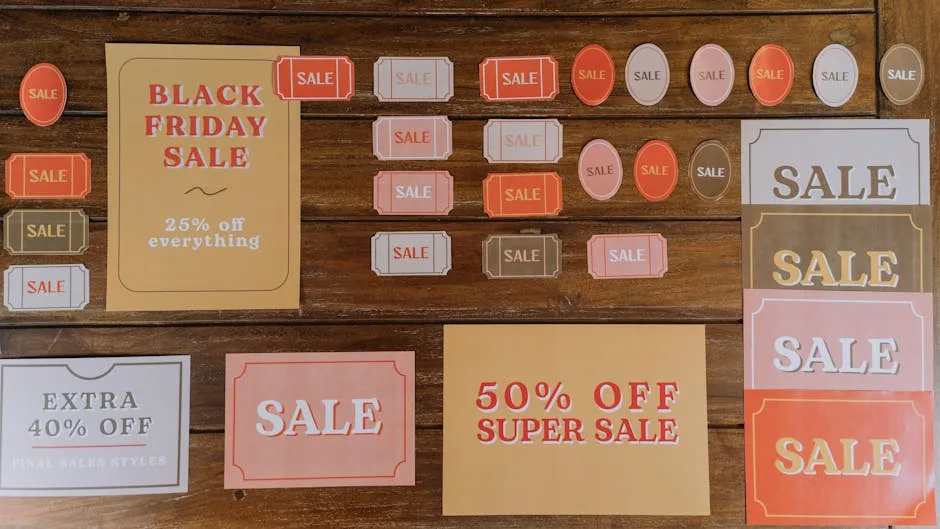
Here is what happens when you compete on price. You lower yours. Your competitor lowers theirs. You match them. They match you. Six months later, you are both selling at cost. Nobody wins except the customer — and even they lose eventually, because brands running on zero margin cannot afford quality products, fast shipping, or decent support.
Amazon's own marketplace data shows that 52% of sellers say price competition is their biggest challenge. And these are sellers on the largest marketplace on earth.
The math is brutal. A 10% price cut on a product with 30% margins requires a 50% increase in unit sales just to break even. Most stores do not get anywhere near that volume increase. They just make less money.
This is why the smartest DTC brands do not compete on price at all. They compete on value.
How Does Value-Based Pricing Work?
Alex Hormozi frames it simply in $100M Offers: price is what you pay, value is what you get. The gap between those two numbers is what makes someone buy.
Most ecommerce brands price based on cost. They calculate materials, shipping, and overhead, add a margin, and call it a day. This is cost-plus pricing. It is the default. And it is wrong.
Value-based pricing starts from the other direction. What is this product worth to the customer? What problem does it solve? What would they pay to solve that problem another way?
A $40 skincare serum that clears acne is not competing with other $40 serums. It is competing with dermatologist visits, prescription medications, and the emotional cost of bad skin. Frame the value correctly, and $40 feels like a steal.
Here is how to apply this to your ecommerce pricing strategy:
- Identify the real outcome. What does your customer actually get? Not the product — the result.
- Quantify alternatives. What else could they spend money on to get that result?
- Position against the alternative. Your product at $60 vs. a $200 alternative makes the purchase decision easy.
- Communicate value on the product page. This is where most brands fail. They list features instead of outcomes. "50ml hyaluronic acid serum" versus "Clear skin in 30 days without a dermatologist." Same product. Different perceived value.
Run your numbers through the Product Pricing Calculator to see how different pricing models affect your margins.

How Does Offer Stacking Make Price Irrelevant?
Hormozi's second principle hits even harder. If you cannot justify a higher price on the product alone, stack the offer until the value is undeniable.
Offer stacking means bundling your core product with bonuses, guarantees, and speed enhancements until the total perceived value dwarfs the asking price. The customer stops comparing your price to competitors — because nobody else is offering the same thing.
Here is what a stacked offer looks like for a Shopify store selling premium coffee:
- Core product: 500g single-origin coffee — $28
- Bonus 1: Free brewing guide (PDF) — valued at $15
- Bonus 2: Access to monthly "roaster's pick" newsletter with exclusive blends — valued at $10/month
- Guarantee: "Love it or we send you a different roast free" — risk reversal
- Speed: Ships within 24 hours, arrives in 2-3 days
Total perceived value: $53+. Price: $28. The customer is not comparing your $28 bag to another $28 bag anymore. They are comparing $28 against $53 worth of stuff.
Does this sound like your store? Find out where you're leaking revenue — take the free Revenue Score. 3 minutes. Free. No pitch.
How Does the Good / Better / Best Framework Work?
Tiered pricing is not new. But most brands implement it wrong. They create three versions of the same product at different price points and hope customers pick the middle one.
The real purpose of Good/Better/Best is not to sell more of the middle tier. It is to anchor perception.
Here is how to structure it:
Good (Entry Tier)
The stripped-down version. It gets the job done but leaves the customer wanting more. This tier exists to lower the barrier to entry and capture price-sensitive buyers who might otherwise leave. Price it at your current product price or slightly below.
Better (Core Tier)
This is your target. It includes the core product plus one or two meaningful additions — faster shipping, a bonus item, extended warranty. Price it 30-50% above Good. This is where most research shows the majority of buyers land, because it feels like the rational choice.
Best (Premium Tier)
The premium option. Bundle everything — the product, all bonuses, priority support, exclusive access. Price it 2-3x above Good. Most people will not buy it. That is fine. Its job is to make Better look reasonable.
A well-structured Shopify pricing page using Good/Better/Best typically lifts AOV by 15-25%. We have seen this across multiple stores in Malaysia and Singapore — the anchor effect of the premium tier consistently pulls buyers toward the middle.
What Are the Practical Steps to Set Your Prices?
Stop guessing. Here is a repeatable process:
- Audit your current margins. Know your true cost per unit including shipping, packaging, returns, and payment processing fees. Most stores underestimate cost by 10-15%.
- Research perceived value. Survey 10-20 customers. Ask: "What would you expect to pay for this?" and "What alternatives did you consider?" Their answers will surprise you.
- Build your offer stack. List every piece of value you can include — guides, guarantees, community access, speed bonuses. Calculate the total perceived value.
- Set three tiers. Use the Good/Better/Best framework. Price the middle tier where you want most sales to land.
- Test and measure. Run both pricing structures for 30 days. Track not just conversion rate but revenue per visitor — a lower conversion rate at a higher price can still mean more total revenue.
Use the Product Pricing Calculator to model different scenarios before you commit.

What Does This Look Like in Practice?
One of our Shopify clients in Malaysia was selling handmade leather goods at RM 180 per piece. Competitors were undercutting them at RM 120-150. Their instinct was to lower the price.
Instead, we rebuilt their product pricing model. We stacked the offer — free monogramming (cost: RM 5), a leather care kit (cost: RM 8), and a lifetime repair guarantee. Total added cost: RM 13. Perceived added value: RM 80+.
They raised the price to RM 220. Conversion rate held steady. Revenue per visitor went up 22% in the first month.
They stopped competing on price. They started competing on value. That is the difference.
Frequently Asked Questions
How do I know if I'm underpricing my products?
If your margins are below 40% after all costs, you are likely underpriced. Another signal: customers rarely complain about your prices. That usually means you are leaving money on the table. Test a 10-15% price increase on your best-selling product and track conversion rate for 30 days.
Does value-based pricing work for commodity products?
Yes — but you have to create differentiation through the offer, not the product itself. Coffee beans are a commodity. A curated subscription with a brewing guide, origin story, and satisfaction guarantee is not. The offer stack turns commodities into unique products.
What if my competitors are already much cheaper?
Good. Let them have the price-sensitive buyers who return products, leave bad reviews, and never reorder. Position your brand for the segment that values quality, service, and experience. That segment is smaller but far more profitable. The geometric growth formula shows how improving margins on fewer customers can outperform high volume at low margins.
How often should I revisit my pricing?
Quarterly. Costs change, competitors shift, and customer perception evolves. Set a calendar reminder to review pricing every 90 days. Re-run your numbers through a product pricing calculator each time.
Keep Reading

Free Download
We audited 10 Shopify stores doing $1M–$20M. Here are the 15 leaks every one had.
Real screenshots (names blurred). Most operators have 8 of the 15 and don't know it.
From 10 audits across SG, MY, AE — fashion, beauty, electronics, food.
PDF in your inbox in 30 seconds. 1 email. No follow-up unless you ask.