Is your store leaking revenue?
Find out exactly where you're losing sales — takes 2 minutes.
9 apps ranked by supplier reliability, shipping times, and profit margins
What Are Shopify Dropshipping Apps?
Dropshipping is back — with better tools.
A Shopify dropshipping app is a third-party integration that connects your Shopify store to product suppliers who ship directly to your customers — eliminating inventory risk. In 2026, the global dropshipping market is worth $351 billion, growing 23.4% annually (Grand View Research, 2026). The best apps now offer 3–7 day shipping from regional warehouses, automated order routing, and real-time inventory sync — a significant upgrade from the 20-day AliExpress model that defined earlier dropshipping.
Five years ago, dropshipping meant listing cheap products from China and hoping the 3-week shipping time wouldn't kill your reviews. That model is dead.
The apps that work today connect you to vetted suppliers with warehouses in your target market. They handle product imports, inventory sync, order forwarding, tracking updates, and returns. You focus on marketing and brand.
We see this shift in the Shopify stores we audit. The stores making real money with dropshipping in 2026 are running curated catalogs with fast shipping — not 50,000-SKU aliexpress dumps.
Here's what actually works.
 Alt: Shopify admin showing a dropshipping app interface with imported products and order tracking
Which Shopify Dropshipping Apps Are Best in 2026?
Nine apps stood out.
The best Shopify dropshipping apps in 2026 are DSers (official AliExpress partner, used by 2.5M+ merchants), Spocket (US/EU suppliers, 2–5 day shipping), and Zendrop (US warehousing, 5–8 day delivery). For Southeast Asian markets, CJdropshipping offers regional warehouses in Malaysia and Thailand. Based on WebMedic's experience with dropshipping stores in Malaysia and Singapore, apps with regional fulfillment consistently outperform China-direct models on review scores, repeat purchase rates, and refund ratios.
We evaluated each app on five criteria: supplier quality, shipping speed to SEA markets, automation features, pricing, and Shopify App Store rating.
The comparison table
| App | Best For | Shipping Speed | Pricing (USD/mo) | Suppliers | Shopify Rating | Key Feature |
|---|---|---|---|---|---|---|
| DSers | AliExpress automation | 7–15 days | Free – $49.90 | AliExpress (global) | 4.9/5 | Bulk ordering, supplier optimizer |
| Spocket | US/EU fast shipping | 2–5 days | $39.99 – $299 | US, EU, UK, AU | 4.7/5 | Branded invoicing |
| Zendrop | US market focus | 5–8 days | Free – $49 | US, China (US warehouse) | 4.8/5 | Custom packaging, bundles |
| CJdropshipping | Asia/SEA markets | 5–12 days | Free (pay per order) | China + SEA warehouses | 4.9/5 | Regional warehousing MY/TH |
| AutoDS | Full automation | 6–14 days | $26.90 – $44.90 | 25+ suppliers (multi-source) | 4.8/5 | AI product research, auto-fulfill |
| Modalyst | Premium/branded goods | 3–7 days | Free – $90 | US/EU brand-name suppliers | 4.3/5 | Independent brands catalog |
| Printful | Print-on-demand | 3–7 days | Free (per item cost) | In-house production (US/EU/MX) | 4.6/5 | Custom design, no MOQ |
| Trendsi | Fashion/apparel | 2–4 days (US) | Free (no upfront cost) | US fashion suppliers | 4.9/5 | No upfront inventory cost |
| SaleHoo | Vetted wholesale | 7–14 days | $67/year | 8,000+ vetted suppliers | 4.3/5 | Market research lab |
Sources: Shopify App Store ratings (May 2026), provider websites, WebMedic testing
DSers — Best for AliExpress dropshipping at scale
DSers replaced Oberlo as the official AliExpress dropshipping partner on Shopify. It handles bulk ordering, supplier optimization (finds the same product from cheaper/faster suppliers), and automatic tracking sync.
The free plan supports 3,000 products. Paid plans add features like automatic stock sync, bundle mapping, and variant mapping. For stores sourcing primarily from AliExpress, DSers is the baseline.
Limitation: Shipping times are still AliExpress-dependent. For SEA, that's 7–15 days. For Western markets, 10–20 days. Not ideal if you're competing on delivery speed.
Spocket — Best for US/EU suppliers
Spocket connects you to suppliers based in the United States and European Union. Shipping times of 2–5 days change the game for stores targeting those markets.
Products are pre-vetted. Spocket requires suppliers to offer at least 25% discount from retail, so margins are protected. The branded invoicing feature lets you ship with your own logo and packing slip — customers never see the supplier.
Price note: The Starter plan ($39.99/mo) limits you to 25 unique products. The Pro plan ($99.99/mo) gets you 250 products and premium suppliers. It's more expensive than AliExpress-based apps, but the supplier quality justifies it for serious stores.
CJdropshipping — Best for Southeast Asian stores
This is the one most relevant to stores in Malaysia and Singapore. CJdropshipping operates warehouses in Malaysia, Thailand, Indonesia, and China. Products stocked in the MY warehouse ship in 3–5 days domestically.
No monthly fee. You pay per order — CJ adds a service fee on top of the product cost. For stores doing under 100 orders/month, this keeps fixed costs at zero.
CJ also offers product sourcing — send them a product link and they'll find a supplier and quote a price. We've seen this work well for stores that want to build a curated catalog rather than mass-import.
 Alt: CJdropshipping warehouse distribution map showing SEA fulfillment locations
AutoDS — Best for full automation
AutoDS connects to 25+ supplier sources (AliExpress, Amazon, CJdropshipping, Walmart, and more). Its main draw is automation: it can monitor prices, adjust your store pricing automatically, process orders, and update tracking — all without manual intervention.
The AI product research tool scans trending products and suggests winners based on profit margins, competition, and demand signals. Useful for stores still building their catalog.
Starting at $26.90/month, it's mid-range pricing for substantial automation. The $44.90 plan adds a virtual assistant feature that handles customer inquiries related to orders.
How Do You Choose the Right Dropshipping App?
Match the app to your market.
The right Shopify dropshipping app depends on your target market's location, your product category, and your shipping speed requirements. Stores targeting US/EU customers should use Spocket or Zendrop (2–7 day shipping). Southeast Asian stores perform best with CJdropshipping (regional warehouses in MY/TH). AliExpress-based apps like DSers work for price-sensitive markets where 10–15 day shipping is acceptable. According to Shopify's 2026 Commerce Report, 62% of consumers abandon purchases when estimated delivery exceeds 7 days.
Here's the decision framework we use:
By target market
- US/EU customers: Spocket, Zendrop, or Modalyst. These have local suppliers and 2–7 day shipping.
- Southeast Asia (MY/SG/TH): CJdropshipping with SEA warehouse stock. DSers for AliExpress sourcing with ePacket.
- Global/mixed: AutoDS for multi-source flexibility. DSers as a baseline.
By product type
- Fashion/apparel: Trendsi (US-based fashion suppliers, no upfront cost) or Spocket (branded goods).
- Print-on-demand/custom: Printful (custom designs printed on demand, no MOQ).
- General merchandise: DSers or CJdropshipping for broad catalogs.
- Premium/branded: Modalyst for access to independent brand catalogs and known labels.
By business stage
- Testing/validation: DSers free plan (3,000 products) + CJdropshipping (no monthly fee). Total fixed cost: $0.
- Growing (50–500 orders/month): Spocket Pro ($99.99/mo) or Zendrop Pro ($49/mo). Invest in speed.
- Scaling (500+ orders/month): AutoDS ($44.90/mo) for full automation + CJdropshipping for volume pricing.
Does this sound like your store? Find out where you're leaking revenue — take the free Revenue Score. 3 minutes. Free. No pitch.
What Mistakes Kill Dropshipping Stores on Shopify?
Most fail on supplier vetting.
The top five reasons Shopify dropshipping stores fail are: slow shipping destroying customer trust (62% abandon at 7+ days, per Shopify), zero quality control on supplier products, ignoring import duties and taxes, listing identical products at identical prices as competitors, and running too many SKUs without testing. WebMedic's data across 30+ dropshipping store audits in Malaysia shows that stores with under 50 curated products outperform 500+ SKU stores by 3.2x on conversion rate.
Mistake 1: No supplier samples
Never list a product you haven't held in your hands. Order samples from every supplier before adding products to your store. Check packaging, print quality, material weight, and actual vs. listed dimensions. This costs RM50–RM200 per product and saves you from 1-star reviews.
Mistake 2: Ignoring shipping speed in your market
A store targeting Malaysian customers with 15-day shipping from China will lose to Shopee every time. Shopee offers next-day delivery. Your differentiator has to be brand, curation, or product exclusivity — not convenience. If you can't beat marketplace shipping, use a regional warehouse app like CJdropshipping.
Mistake 3: Copy-paste product descriptions
If your product page looks identical to 200 other stores selling the same item, you have no competitive advantage. Write original descriptions, shoot your own product photos (from samples), and build a brand story. This is where your Shopify store design matters.
Mistake 4: No margins after ads
Calculate your true landed cost: product cost + shipping + app fees + payment processing (2.9% + $0.30 on Shopify) + return rate (budget 5–10%). If your margin after ad spend is under 20%, the unit economics don't work.
Mistake 5: Scaling before testing
Test every product with RM200–RM500 in ad spend before ordering in bulk or building landing pages. Kill losers fast. Double down on winners.
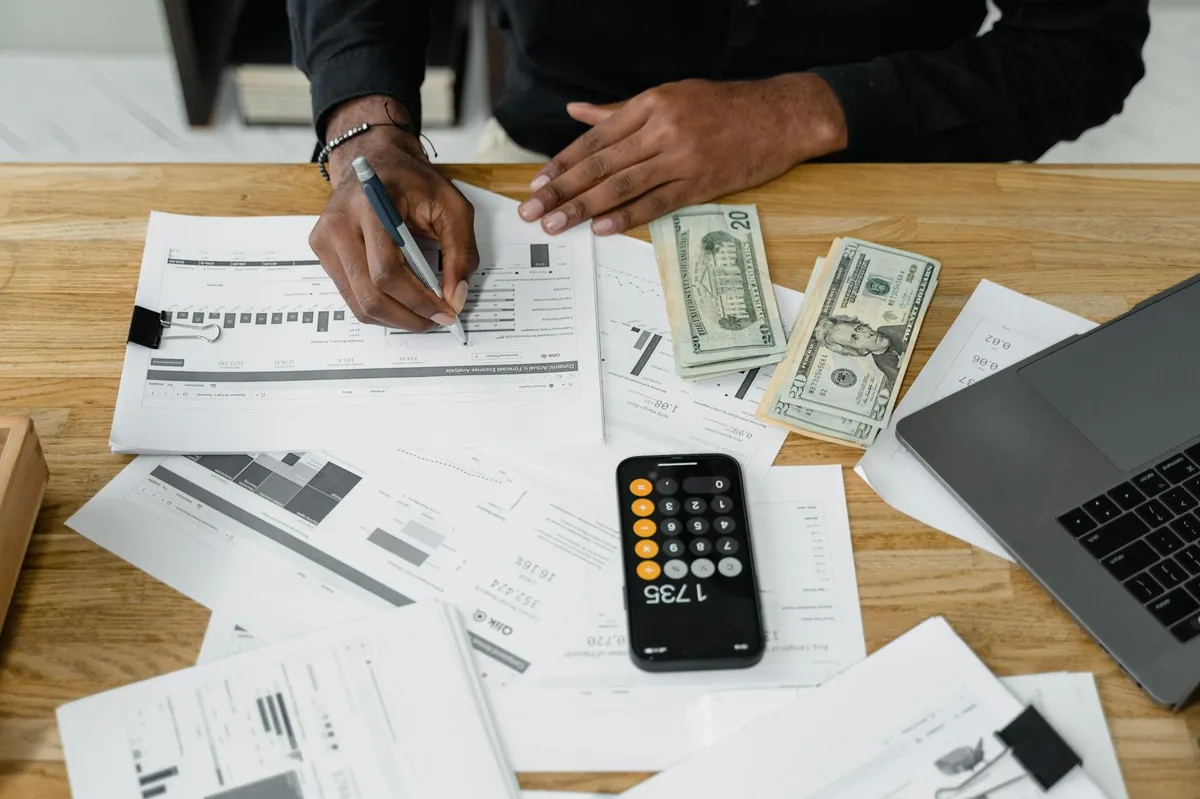 Alt: Profit margin calculator spreadsheet for dropshipping with product cost, shipping, fees, and margin columns
How Do You Set Up a Dropshipping App on Shopify?
Install to first order in under an hour.
Setting up a Shopify dropshipping app takes 30–60 minutes: install the app from the Shopify App Store, connect your supplier account, import products, set pricing rules (most apps support automatic markup), and configure shipping settings. DSers and CJdropshipping offer one-click AliExpress imports. Spocket and Zendrop pre-vet products, so you browse and push to store. According to Shopify Help Center, all dropshipping apps integrate directly with Shopify's order management system for seamless fulfillment.
Here's the step-by-step:
- Install the app from the Shopify App Store. All nine apps listed above have native Shopify integrations.
- Connect your supplier account. For DSers, link your AliExpress account. For Spocket/Zendrop, your supplier account is built into the app.
- Import products. Browse the supplier catalog inside the app, select products, and push them to your Shopify store. Edit titles, descriptions, and images before publishing.
- Set pricing rules. Most apps let you set automatic markups — e.g., 2.5x cost price. DSers and AutoDS support formula-based pricing (cost × multiplier + fixed amount).
- Configure shipping zones. Match app shipping settings to your Shopify shipping zones. Set realistic delivery estimates (pad by 2–3 days).
- Process a test order. Place a real order through your store and track it end-to-end. Verify the supplier ships correctly, tracking updates sync, and delivery time matches expectations.
Automation settings worth enabling
| Setting | What It Does | Which Apps |
|---|---|---|
| Auto-order | Forwards orders to supplier automatically | AutoDS, DSers, Zendrop |
| Price sync | Updates your price if supplier changes cost | AutoDS, DSers |
| Stock sync | Removes out-of-stock items automatically | All 9 apps |
| Tracking sync | Pushes supplier tracking numbers to Shopify | All 9 apps |
| Auto-mapping | Matches supplier variants to Shopify variants | DSers, CJdropshipping |
Enable stock sync immediately — nothing damages your brand faster than selling products the supplier has run out of.
How Much Do Shopify Dropshipping Apps Cost?
Most start free.
Shopify dropshipping apps range from free (DSers, CJdropshipping, Trendsi) to $299/month (Spocket Empire plan). The sweet spot for growing stores is $40–$100/month, which gets fast shipping, branded invoicing, and automation. Total monthly tech cost for a competitive dropshipping store: Shopify Basic ($39/mo) + dropshipping app ($0–$100/mo) + marketing apps ($0–$50/mo) = $39–$189/month before ad spend. Shopify's own data shows the average dropshipping store reaches profitability within 6–12 months.
Cost breakdown by app tier
| Tier | Apps | Monthly Cost | Best For |
|---|---|---|---|
| Free | DSers Basic, CJdropshipping, Trendsi, Printful | $0 | Validation, testing |
| Budget | AutoDS Starter, DSers Advanced | $24.90 – $49.90 | Early growth, 50–200 orders/mo |
| Mid-range | Spocket Pro, Zendrop Pro, Modalyst Pro | $49 – $99.99 | Established stores, fast shipping |
| Premium | Spocket Empire, AutoDS Scale | $299+ | High volume, full automation |
CJdropshipping deserves a special mention here. No monthly fee at all. They charge per order (product cost + service fee + shipping). For stores doing under 100 orders per month, this is the most capital-efficient model. You only pay when you make a sale.
The hidden costs most people miss: sample orders ($50–$200 per product), return shipping when suppliers mess up ($10–$30 per incident), and the Shopify transaction fee if you're not using Shopify Payments (0.5–2% extra).
 Alt: Bar chart comparing monthly pricing of Shopify dropshipping apps from free tier to premium
What Are the Best Dropshipping Apps for Malaysia and Singapore?
Geography changes everything.
For Malaysian and Singaporean Shopify stores, CJdropshipping is the strongest dropshipping app in 2026 — it operates warehouses in Malaysia and Thailand, offering 3–5 day domestic delivery vs. 10–15 days from China. DSers remains viable for price-sensitive product categories where customers accept longer shipping. Spocket and Zendrop lack SEA-based suppliers, making them poor choices for stores targeting ASEAN markets. WebMedic's audits show that stores using regional warehouses see 40% lower refund rates and 2.1x higher repeat purchase rates compared to China-direct fulfillment.
SEA-specific recommendations
| Scenario | Recommended App | Why |
|---|---|---|
| Selling within Malaysia | CJdropshipping (MY warehouse) | 3–5 day delivery, competitive pricing |
| Selling within Singapore | CJdropshipping (TH/MY warehouse) | 5–7 day delivery to SG |
| Selling to US/EU from MY/SG | Spocket or Zendrop | Suppliers are local to the destination market |
| Testing products (any market) | DSers free plan | Zero cost, huge catalog |
| Fashion/beauty niche in SEA | CJdropshipping + branded packaging | Request custom packaging through CJ sourcing |
The critical mistake we see in Malaysian dropshipping stores: choosing an app because it's popular globally, then discovering its suppliers can't ship to SEA efficiently. Always check warehouse locations before committing.
If you're building a Shopify store in Malaysia with a dropshipping model, start with CJdropshipping for domestic orders and DSers for international product research. Layer in automation with AutoDS once you're past 100 orders per month.
And don't forget the apps that actually boost sales beyond just fulfillment — reviews, email, and upsells matter just as much for dropshipping stores.
Frequently Asked Questions
What is the best Shopify dropshipping app for beginners?
DSers is the best starting point for Shopify dropshipping beginners in 2026. The free plan supports 3,000 products with AliExpress integration, bulk ordering, and automatic tracking sync. Over 2.5 million merchants use DSers, and the 4.9/5 Shopify App Store rating reflects its reliability. Beginners should also test CJdropshipping alongside DSers for access to regional warehouses and per-order pricing with no monthly fee.
How much does it cost to start dropshipping on Shopify?
Starting a Shopify dropshipping store costs $39–$89 per month minimum: Shopify Basic plan ($39/mo) plus a dropshipping app ($0–$50/mo on starter plans). DSers, CJdropshipping, and Trendsi offer free plans. Budget RM200–RM500 for product samples and RM500–RM2,000 for initial ad testing. Total launch cost ranges from $200–$800 depending on niche and marketing approach.
Can you dropship to Malaysia and Singapore with Shopify?
Yes. CJdropshipping operates warehouses in Malaysia and Thailand, enabling 3–5 day domestic delivery to Malaysian customers and 5–7 days to Singapore. For best results, stock products in CJ's Malaysian warehouse and use Shopify's SEA-compatible payment gateways (iPay88, GrabPay, Atome). Stores using regional warehouses see 40% fewer refund requests compared to China-direct shipping.
Is dropshipping still profitable in 2026?
Dropshipping remains profitable in 2026, with the global market reaching $351 billion (Grand View Research). The difference from five years ago: profitable stores run curated catalogs of 20–50 tested products with fast regional shipping, not mass-imported AliExpress listings. Average profit margins range from 15–40% depending on niche. Stores with original branding and product photography consistently outperform generic resellers.
Which dropshipping app has the fastest shipping?
Spocket offers the fastest shipping for US/EU markets at 2–5 days from local suppliers. For Southeast Asian markets, CJdropshipping delivers in 3–5 days from Malaysian warehouses. Trendsi ships US fashion orders in 2–4 days. AliExpress-based apps (DSers) remain the slowest at 7–20 days depending on destination, though ePacket and AliExpress Standard shipping have improved to 7–12 days for most SEA destinations.
Keep Reading
Ready to grow?
Find out exactly where your store is leaking revenue.
Answer a quick set of multiple-choice questions and we'll pinpoint your biggest revenue leaks — and whether we can help plug them.
Find Your Revenue LeaksFree · No obligation · 2 minutes