Is your store leaking revenue?
Find out exactly where you're losing sales — takes 2 minutes.
How to sell beauty products online with a conversion-first approach, not more ad spend.
Traffic is not your problem. Trust is. Most beauty and personal care brands in Malaysia and Singapore have plenty of visitors. Visitors land on product pages, browse ingredients lists, and leave without buying. The gap between "interested" and "purchased" is where revenue dies.
This guide gives you the practical execution sequence to close that gap. It works for skincare, cosmetics, haircare, and wellness brands selling on Shopify in either market. Start here, then move to the strategy guide for channel and retention planning.
Before diving in, get a baseline: run your store through the free scorecard to see where you stand.
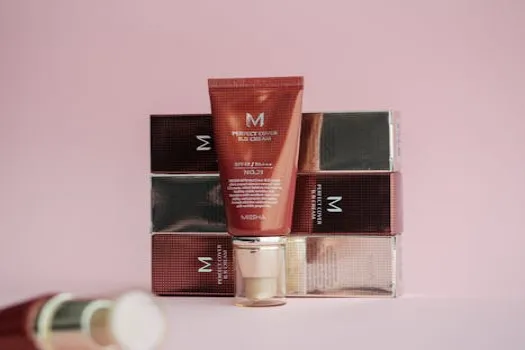
How Do You Build a Conversion-Ready Storefront?
Beauty ecommerce sees [cart abandonment rates above 70%]
Quick Answer: How do you sell beauty products online in Malaysia?
Fix trust before traffic. Beauty ecommerce has 70%+ cart abandonment because product uncertainty is high. Start with ingredient transparency, claims backed by proof, and certifications near the buy button. Photo reviews lift conversion by 25-30%. Follow a 90-day sequence: audit, fix PDPs, then scale channels.(https://www.statista.com/statistics/457078/category-cart-abandonment-rate-worldwide/) — among the highest of any category — because product uncertainty is so high. Your store needs to pass a basic trust test within 5 seconds of landing. For beauty products, that means:
Product page non-negotiables:
- Ingredient transparency. List full ingredients with a plain-language explanation of what each does. "Contains niacinamide" means nothing to most buyers. "Niacinamide — brightens uneven skin tone over 4-6 weeks" converts.
- Claims with proof. "Clinically tested" needs a visible study reference or certification badge. "Reduces fine lines" needs before-and-after imagery or a customer result.
- Texture and sensory cues. Buyers can't touch or smell online. Use close-up product texture shots, describe consistency ("lightweight gel, absorbs in 30 seconds"), and show application video.
- Certifications front and centre. Halal, dermatologist-tested, cruelty-free, vegan — display these as badges near the add-to-cart button, not buried in a tab.
Store architecture:
- Use Shopify as your default stack. It handles multi-currency (MYR/SGD), local payment gateways, and iteration speed better than alternatives in this market.
- Keep collections tight: by skin concern (acne, aging, brightening) rather than just product type (serum, cream, toner). Buyers search by problem, not format. The same principles apply if you are selling fashion products online in Malaysia — organize by use case, not product type.
- Mobile-first design is non-negotiable. Over 70% of beauty ecommerce traffic in SEA comes from mobile.
For Shopify setup specifics in Malaysia or Singapore, see those service guides.
But a beautiful product page means nothing if the checkout flow breaks trust at the last moment.
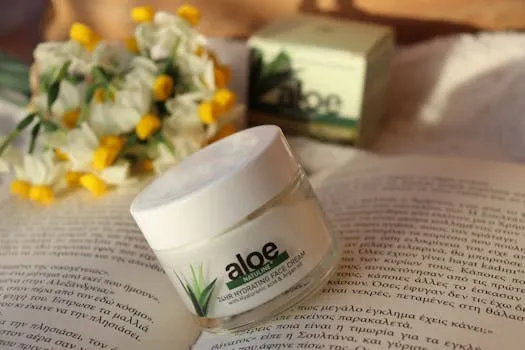
How Do You Fix Trust and Checkout Confidence?
Do not increase ad spend on top of a broken funnel. First tighten the conversion flow:
Trust architecture:
- Reviews with photos are your highest-leverage trust signal — photo reviews increase beauty product conversion by 25-30% compared to text-only ratings. Implement a review collection flow from day one — automated post-purchase emails at day 7 and day 14. For a deeper look at retention-driven personal care marketing strategy, see that guide.
- Display a "How to use" section on every PDP. Simple 3-step routines reduce purchase anxiety ("Will this work with my existing routine?").
- Show your return policy prominently. For beauty products, "Try it for 14 days — if your skin reacts, we'll refund" removes the #1 objection.
Checkout confidence:
- Surface delivery timelines on the product page, not just at checkout. "Delivers in 2-3 business days to KL" or "Next-day delivery in Singapore" should be visible before add-to-cart.
- Display payment method logos (GrabPay, Touch 'n Go, PayNow, credit cards) near the buy button. Payment trust is a surprisingly large friction point in SEA.
- Keep checkout to minimum steps. Guest checkout should be default — don't force account creation.
With your conversion engine fixed, the next question is: where do Malaysia and Singapore actually differ?
Does this sound like your store? Find out where you're leaking revenue — take the free Revenue Score. 3 minutes. Free. No pitch.
How Do Malaysia and Singapore Differ in Execution?
You do not need separate country playbooks. Keep one core system and adjust only where buyer behaviour materially changes conversion:
| Factor | Malaysia | Singapore |
|---|---|---|
| Price sensitivity | Higher — show unit price, bundle savings, subscription discounts clearly | Lower — brand positioning and quality signals outperform discount messaging |
| Payment methods | FPX, GrabPay, Touch 'n Go essential — display prominently | PayNow, credit cards dominant — ensure frictionless checkout |
| Key certification | Halal (JAKIM) — make it a hero badge on PDPs | HSA registration for therapeutic claims — display compliance |
| Delivery expectation | 2-3 business days acceptable | Same-day or next-day expected |
| UX bar | Functional mobile-first design converts | Higher polish, faster load times expected |

Now that you know what to build and how to localize it, here's how to execute it without getting overwhelmed.
What Does a 90-Day Execution Sequence Look Like?
Don't try to fix everything at once. Follow this order:
- Days 1-14: Audit your funnel with the scorecard. Identify the top 3 conversion leaks — usually PDP trust, checkout friction, or mobile UX issues. Fix those first.
- Days 15-45: Improve product page structure — add ingredient explanations, before-after proof, and review collection. Strengthen checkout with delivery timelines and payment badges. Set up a welcome campaign so every new subscriber enters a high-converting onboarding sequence.
- Days 46-90: Only now increase channel spend. With conversion fixed, your CAC drops and every dollar works harder. Start with retargeting your existing traffic before prospecting new audiences.

Why Does Before-and-After Content Convert Best?
This is your highest-converting asset. Nothing else comes close.
Before-and-after photos outperform every other content type in beauty ecommerce — product shots, lifestyle imagery, influencer content, all of it. We see this in every audit. The reason is simple: buyers want proof on skin, not promises on packaging.
But most brands execute before-and-afters poorly. Inconsistent lighting, different angles, unclear timelines. That kills credibility instead of building it.
Standards that matter:
- Same lighting, same angle, same distance in both shots. No exceptions.
- Minimum 4-week gap for skincare results. Anything shorter looks staged.
- Label the timeline clearly: "Day 1 vs. Week 6" — not vague "before" and "after" text.
- Show diverse skin types. Malaysian and Singaporean customers want to see results on skin that looks like theirs. A product page full of one skin tone signals "this wasn't made for me."
Get written consent from every person photographed. Build a release template into your onboarding or post-purchase flow so it happens automatically, not as an afterthought.
User-submitted before-and-afters outperform brand-shot ones. They feel more real because they are more real. Incentivize submissions with store credit or loyalty points, then feature them prominently on your product pages — not buried in a separate gallery no one visits.
We moved a Malaysian skincare brand's before-and-after photos from a standalone "Results" page onto individual PDPs. Conversion on those pages increased 18% in the first month.
How Do Routine Bundles Triple AOV?
Single-SKU buyers have low lifetime value. They buy one serum, maybe repurchase it once, then disappear. Bundles change the math entirely.
Package products into routines: "The 3-Step Hydration Routine" — cleanser, serum, moisturizer — at 15% off individual prices. This does three things at once.
First, it increases AOV immediately. Second, it educates customers on proper usage order, which improves results and reduces returns. Third, it creates switching costs. Once a buyer is invested in a system, they don't replace one piece — they stay with the whole routine.
Pricing thresholds we've tested:
In Malaysia, bundles priced under RM 150 convert best for first-time buyers. Cross that line and you see a sharp drop in add-to-cart rate. In Singapore, the threshold sits around SGD 70 — higher purchasing power, but still price-conscious on a first purchase from an unfamiliar brand.
Name your bundles by outcome, not by contents. "The Brightening Routine" outsells "Cleanser + Serum + Moisturizer Bundle" every time. Buyers purchase results, not SKU lists.
Use the product pricing calculator to model bundle margins before you launch. A 15% discount on a 3-product bundle should still land you above 55% gross margin — if it doesn't, your unit economics need fixing first.
Display bundles as the default option on your PDP, with individual products as the secondary choice. We restructured a Singapore beauty brand's product pages this way and saw AOV jump from SGD 38 to SGD 67 in six weeks.
Should You Offer Subscription Replenishment?
Your customers are reordering somewhere. The question is whether it's from you.
A cleanser lasts roughly 6 weeks. SPF lasts about 4 weeks. Serum stretches to 8 weeks. If you're not offering auto-replenishment, you're losing reorders to Shopee and Watson's. Every missed reorder is a customer training themselves to buy from someone else.
Start simple. "Subscribe & save 10%" on your top 5 SKUs. Don't launch subscriptions across your entire catalogue — pick the products with the highest repurchase rates and nail those first. For consumables like SPF and cleansers, a refill reminder campaign can recover reorders you are currently losing.
Use Shopify's native subscription apps. Recharge and Loop are the two we deploy most. Both handle the core flow: recurring billing, skip/pause options, and subscriber management. Don't build custom.
Track subscriber churn monthly. If it's above 15%, your reminder emails and skip/pause flow need work. Most churn happens because customers accumulate product faster than they use it. A well-timed "skip this month?" email before the charge date fixes this. For lapsed buyers who have already dropped off, a re-activation campaign can bring them back before they forget your brand entirely.
Singapore adopts subscriptions faster than Malaysia. Singaporean buyers are already familiar with the model from meal kits and supplements. In Malaysia, position subscriptions as convenience — "never run out of your SPF" — rather than savings. The 10% discount matters less than the ease of not having to remember to reorder.
One more thing: subscriptions give you predictable revenue. That changes how you plan inventory, forecast cash flow, and negotiate with suppliers. The operational benefit is as large as the retention benefit.
Frequently Asked Questions
Do we need separate stores for Malaysia and Singapore?
No. One Shopify store with Shopify Markets or a multi-currency setup. Localize currency, delivery timelines, and payment methods — not the store itself.
What conversion rate should we target?
Most beauty stores in SEA sit between 1-2%. After fixing PDP trust and checkout confidence, 2.5-4% is realistic. Even moving from 1.5% to 3% doubles revenue on the same traffic.
How important are product reviews?
Critical. Beauty is high-trust, high-consideration. Photo reviews showing real results on real skin carry more weight than star ratings alone. Start collecting them immediately.
Keep reading:
- Beauty Marketing Strategy — Channel priorities, seasonal planning, and profitable growth for beauty brands.
- Beauty & Personal Care Ecommerce — The full industry hub for beauty ecommerce in Malaysia and Singapore.
- Shopify Malaysia — Launch and grow your Shopify store in Malaysia.
- Shopify Singapore — Shopify setup, optimisation, and growth in Singapore.
WebMedic helps beauty brands build, launch, and grow on Shopify. Get your free store score →

Free Download
23 things your top competitor's store has that yours doesn't.
"I look at their store and it just looks better. We get the traffic — something's clearly off." Here are the 23 specific things they're doing.
Benchmarked across 20+ Shopify stores in beauty, fashion, food & beverage. Half the gaps close in under a week.
PDF in your inbox in 30 seconds. 1 email. No follow-up unless you ask.