Is your store leaking revenue?
Find out exactly where you're losing sales — takes 2 minutes.
A strategy framework for F&B ecommerce, built around repeat purchase, not one-time sales.
People eat every day. That is F&B ecommerce's unfair advantage. If your first-order experience is good, repeat purchase is almost automatic. The strategy question isn't "how do we get more customers?" — it's "how do we make the first order so good that the second one is inevitable?"
Read the foundations guide first: How to Sell Food Online. Get a baseline with the free scorecard.
What Must a Real F&B Strategy Solve?
Your strategy must answer four questions:
Quick Answer: What drives F&B ecommerce profitability?
Repeat purchase is where the money lives. With typical F&B margins around 40% and AOV near RM45, your allowable CAC is only ~RM12. That rules out expensive acquisition at scale. Brands that hit 40%+ repeat purchase rates within 60 days win — the rest burn cash on one-time buyers.
- What's the hero product or entry point? Not your entire catalogue. One product or bundle that's easy to buy, easy to deliver, and easy to love. Everything else is a repeat-purchase upsell.
- What channel mix fits your margin? F&B margins are typically thinner than beauty or fashion. If your AOV is RM45 and margin is 40%, you can afford ~RM12 CAC. That rules out expensive acquisition channels at scale.
- How do you engineer repeat purchase? Subscription, reorder reminders, bundle upgrades, or seasonal boxes. This is where F&B profitability lives.
- What's your delivery moat? In food, delivery quality IS product quality. A damaged or late delivery isn't just a bad experience — it's a destroyed product. Delivery-related complaints account for 40-60% of negative reviews in F&B ecommerce.
With those four answers locked in, your channel mix falls into place.
How Should You Structure Channels and Funnels?
F&B channels should be chosen based on your margin reality:
Organic and content (highest ROI for F&B):
- Recipe content that naturally features your products. "3 easy breakfast ideas with [your granola]" drives targeted traffic and demonstrates usage.
- SEO targeting "buy [product] online Malaysia" and recipe-intent queries.
- User-generated content from customers sharing meals and unboxing. Reshare on social.
Email and retention (your profit engine):
- Welcome sequence: 4 emails covering your story, how to use the product, and a reorder incentive
- Replenishment reminders: timed to your product's consumption cycle (every 2 weeks for coffee, monthly for sauces)
- Win-back sequence at 45 and 60 days for lapsed customers
- Subscription with a discount (10-15% off) and easy pause/cancel to reduce churn
Paid social (careful with margins):
- UGC-style creative outperforms polished brand content in food
- Target lookalikes of repeat purchasers, not just any buyer
- Focus on first-order offers: "Try our bestseller for RM29 with free delivery"
- Set strict ROAS thresholds — F&B can't absorb unprofitable acquisition for long
The priority order:
- Fix conversion and delivery experience (foundation)
- Email and subscription mechanics (cheapest revenue)
- Organic content and SEO (compounds over time)
- Paid social (only with strict payback rules)
But the priority order shifts depending on your market. Here's where execution diverges.
How Do Malaysia and Singapore Differ in Execution?
| Factor | Malaysia | Singapore |
|---|---|---|
| Price sensitivity | Higher — bundle savings and subscription discounts matter | Lower — premium positioning works |
| Delivery expectation | 2-3 days acceptable outside KV | Same-day or next-day expected |
| Halal importance | Essential for mainstream adoption | Important but less decisive |
| Payment methods | FPX, GrabPay, TnG, COD | PayNow, credit cards |
| Subscription appetite | Growing but price-sensitive | Strong — convenience-driven |
| Regulatory | MESTI, Halal (JAKIM) | SFA licensing |
Strategy without a measurement rhythm is just guessing. Here's how to make it operational.
Does this sound like your store? Find out where you're leaking revenue — take the free Revenue Score. 3 minutes. Free. No pitch.
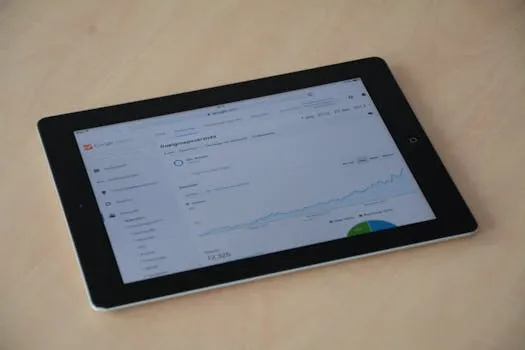
What KPIs Should You Track Weekly?
Weekly:
- Monitor: conversion rate, AOV, delivery success rate, subscription churn
- Check: are reorder reminder emails firing on schedule?
- Review: any delivery complaints or freshness issues?
Monthly:
- Full funnel review: traffic → add-to-cart → checkout → delivered successfully
- Repeat purchase rate (target: 40%+ within 60 days for consumable F&B — top performers hit 50%+)
- Subscription metrics: new subscribers, churn rate, average subscription lifetime
- CAC by channel vs. customer lifetime value
Quarterly:
- Is the hero product still the right entry point? Test alternatives.
- Delivery partner review: are SLAs being met?
- Pricing and margin review: can you sustain current CAC at scale?
- New product launch planning based on reorder data (what do repeat buyers buy most?)
The execution rhythm:
- Weeks 1-2: fix top conversion and delivery friction
- Weeks 3-6: build subscription and reorder mechanics
- Weeks 7-12: scale channels with strict payback controls
How Does Product Bundling Lift AOV?
Bundles sell more than singles. We see this in every F&B audit we run — brands that offer only individual SKUs leave 20-30% of potential AOV on the table.
The reason is simple. Food buyers think in meals, not in items. A sambal brand selling one jar at RM18 has a ceiling. That same brand bundling 3 flavours + a pack of rice crackers at RM59 gives the buyer a complete experience and a reason to try variants they wouldn't pick individually.
The minimum bundle framework:
Every F&B bundle should contain three components:
- Hero product — your bestseller, the thing they came for
- Complementary item — something that pairs with the hero (crackers with dip, milk with coffee beans, rice with sauce)
- Discovery item — a new or secondary product they haven't tried yet
This structure works because the hero product justifies the purchase, the complementary item increases perceived value, and the discovery item creates future reorder potential for a product they wouldn't have bought alone.
Bundle types that work in MY/SG:
- Starter kits — first-time buyer bundles at a lower price point. Best for acquisition campaigns. "Try all 3 for RM49" is a stronger offer than "buy 1 for RM22."
- "Complete meal" bundles — hero product + sides + a condiment. We've seen these lift AOV by 35-50% for Malaysian meal kit brands.
- Family packs — larger quantities at a per-unit discount. Works well for snack brands and staples where household consumption is predictable.
Price bundles 15-20% below the sum of individual items. Enough savings to feel real, not enough to destroy your margin.
Use the CLV calculator to model how bundle AOV changes your customer lifetime value — the compounding effect on a subscription customer is significant.
What Makes Subscription Mechanics Stick?
Subscriptions print money — until they don't. The difference is matching frequency to consumption.
We see brands default to monthly subscriptions for every product. That's wrong. Coffee drinkers burn through 250g in 10-14 days. A monthly subscription means they run out, buy from the supermarket, and forget to come back. Meanwhile, a sauce customer getting a bottle every 30 days has a cupboard full of unopened jars and cancels out of frustration.
Frequency-matched subscription timing:
- Coffee and tea: every 2 weeks
- Snacks and dried goods: every 3 weeks
- Sauces and condiments: every 5-6 weeks
- Supplements and health foods: every 4 weeks
Get the frequency right and churn drops. Get it wrong and you either annoy customers with too-frequent deliveries or lose them to supermarket convenience between shipments.
Subscription discount tiers:
- 10% off for monthly (rolling) subscriptions
- 15% off for quarterly (prepaid) subscriptions
Keep it simple. Two tiers. No complicated loyalty points or "subscribe for 6 months to unlock gold status." F&B customers want savings and convenience, not a rewards programme.
Pause, skip, and cancel must be frictionless. One click. No "are you sure?" loops, no hidden cancellation flows. We've audited Shopify stores where cancelling a subscription required emailing support. Their churn was 3x the category average. Customers who can easily pause come back. Customers who feel trapped leave angry reviews.
Shopify's native subscription apps — Recharge, Loop Subscriptions — handle this natively. No custom development needed. Loop is particularly strong for the APAC market with built-in dunning management for failed payments, which is common with Malaysian debit cards.
One important market note: Malaysia's subscription ecommerce adoption is roughly 2 years behind Singapore's. Start with a simple "subscribe & save" discount on individual products before attempting full subscription boxes. Malaysians are still warming up to recurring charges. Singaporeans already expect them.
When Should You Send Reorder Reminders?
Timing is the entire game. Send a reorder reminder too early and customers ignore it. Send it too late and they already bought from the supermarket shelf.
Here's the reorder reminder schedule we use across F&B clients:
| Product type | Reorder reminder | Follow-up if no action |
|---|---|---|
| Coffee / tea | 14 days | 17 days |
| Snacks / dried goods | 21 days | 25 days |
| Supplements / health | 28 days | 33 days |
| Sauces / condiments | 45 days | 52 days |
These timings assume standard household consumption. Adjust based on your actual reorder data — your Shopify analytics will show you the median days-between-orders for repeat customers.
The follow-up email matters as much as the first reminder. The first email says "running low?" The second email adds urgency: free delivery if you reorder today, or a small bundle upsell.
Getting this wrong costs you twice. Remind too early and customers train themselves to ignore your emails. Remind too late and you've already lost them to the Tesco shelf or a GrabMart impulse buy. In Malaysia especially, the convenience store and hypermarket network is dense — your competition isn't just other DTC brands, it's the Cold Storage downstairs.
Use the email list revenue calculator to model how reorder email timing affects your list's revenue output. Even a 5-day shift in timing can move revenue per subscriber by 15-20%.
FAQ
When should we launch subscriptions?
After the first-order experience is reliably good — product quality, packaging, and delivery timing are consistent. Subscriptions amplify whatever experience you're delivering, good or bad.
Do MY/SG differences require separate strategies?
No. One strategy, one measurement system. Apply market differences inside channel settings, delivery operations, and checkout copy.
How do we reduce delivery-related complaints?
Invest in packaging (insulation, ice packs, damage protection). Offer delivery scheduling. Send tracking notifications. Set expectations on the product page — before purchase, not after.
Keep reading:
- How to Sell Food Online — The foundations guide: product pages, freshness trust, and conversion fixes.
- Food & Beverage Ecommerce — The full industry hub for F&B ecommerce in Malaysia and Singapore.
- Ecommerce Agency Malaysia — Full-service ecommerce support from launch through ongoing optimisation.
- Ecommerce Agency Singapore — Shopify agency for DTC brands in Singapore.
WebMedic helps F&B brands build, launch, and grow on Shopify. Get your free store score →

Free Download
23 things your top competitor's store has that yours doesn't.
"I look at their store and it just looks better. We get the traffic — something's clearly off." Here are the 23 specific things they're doing.
Benchmarked across 20+ Shopify stores in beauty, fashion, food & beverage. Half the gaps close in under a week.
PDF in your inbox in 30 seconds. 1 email. No follow-up unless you ask.