Is your store leaking revenue?
Find out exactly where you're losing sales — takes 2 minutes.
Eight hardwired buying drivers every Shopify store should activate
Nobody buys a drill because they want a drill.
They buy it because they want a hole in the wall. Or more accurately — they want the shelf on the wall, the organised room, and the feeling of having their life together. The drill is just the vehicle.
Every ecommerce purchase follows this same pattern. The product is never the real reason someone buys. The real reasons are psychological — hardwired drives that have been influencing human decisions for thousands of years.
Understanding these triggers is not manipulation. It is clarity. When you know why people buy, you can build a store that speaks to their actual motivations instead of guessing.
For the complete 24-trigger reference, see The Full Psychology Playbook.
Here are the eight triggers we see driving purchases across every Shopify store we work with in Malaysia and Singapore.
1. Why Is Fear of Loss Stronger Than Desire for Gain?
People are roughly twice as motivated to avoid a loss as they are to achieve a gain.
Quick Answer: What psychological triggers drive ecommerce purchases?
Eight hardwired triggers drive every buying decision: fear of loss, social proof, desire for comfort, need to feel superior, mental ownership, reciprocity, authority, and honesty. Social proof consistently has the highest impact across categories. Stores that activate multiple triggers on every product page convert at 3-4% instead of the typical 1-2% — no exotic tactics, just fundamentals applied consistently. This is loss aversion — one of the most studied findings in behavioural economics, first documented by Kahneman and Tversky.
In ecommerce, this shows up everywhere:
- "Only 3 left in stock" works better than "Popular item"
- "Sale ends tonight" outperforms "Great price"
- "Don't miss out" beats "Join in"
How to use it: Frame your offer around what the customer stands to lose by not acting. A skincare brand does not say "Get clearer skin." It says "Stop waking up to breakouts."
But there is an important boundary. Fake scarcity destroys trust. If you show "Only 2 left" on a product that is always in stock, customers will notice — and they will not come back.
2. How Does Social Proof Influence Buying Decisions?
When people are uncertain, they look at what others are doing. This is not a weakness — it is a survival mechanism. If 4,000 people bought this product and rated it 4.8 stars, it is probably safe to buy.
Research by Robert Cialdini established social proof as one of the six fundamental principles of persuasion. In ecommerce, it is arguably the most powerful.
The hierarchy of social proof:
| Type | Trust Level | Example |
|---|---|---|
| User-generated content | Highest | Customer photos on Instagram |
| Verified purchase reviews | High | "Bought this 3 months ago — still using daily" |
| Star ratings | Medium | 4.8 out of 5 (1,200 reviews) |
| Testimonials (curated) | Medium-Low | "Amazing product!" — Sarah K. |
| Logos / "As seen in" | Low | Brand logos without context |
The most effective social proof is specific, recent, and includes detail. "Great product!" means nothing. "I bought this for my husband and he uses it every morning — the battery lasts a full week" — that sells.
Does this sound like your store? Find out where you're leaking revenue — take the free Revenue Score. 3 minutes. Free. No pitch.
3. Why Does Comfort and Convenience Drive Purchases?
One of the eight biologically hardwired human drives identified in advertising research is the desire for comfortable living conditions. People are constantly seeking to reduce friction and effort in their lives.
This is why Amazon wins. Not because they are cheapest — because they are easiest.
In your store, this means:
- Reduce checkout steps. Every extra field is friction.
- Show shipping costs early. Surprise fees at checkout are the number one reason for cart abandonment.
- Offer multiple payment options. In Malaysia, this means supporting e-wallets and bank transfers alongside cards.
- Make returns simple and obvious. A generous return policy does not increase returns — it increases purchases.
Comfort is not just about the product. It is about the entire experience of buying from you.
4. How Does the Need to Feel Superior Drive Sales?
People buy things that make them feel ahead of others. This is not vanity — it is a fundamental human drive. We compare ourselves to our peers constantly, and products that help us feel like we are winning get bought.
How it shows up in ecommerce:
- "Professional grade" (implies you are serious, not amateur)
- "What top performers use" (implies joining an elite group)
- "Most advanced formula" (implies you are getting the best)
- Limited editions and exclusives (implies access others do not have)
This trigger works especially well for mid-to-premium products. A RM500 coffee grinder does not need to justify itself on features alone — it needs to make the buyer feel like they are the kind of person who takes coffee seriously.
5. What Is Mental Ownership and Why Does It Convert?
When someone mentally pictures themselves using your product, they are already halfway to buying. Sugarman called this the "feeling of involvement" — the moment a customer's imagination places them inside the experience of ownership.
How to trigger it:
- Use second person: "You" and "your" instead of "our" and "we"
- Describe the experience, not the object: "Wake up to the smell of fresh espresso" instead of "Programmable timer function"
- Show the product in context: lifestyle images where someone like the buyer is using the product
- Interactive elements: configurators, colour selectors, "see it in your space" tools
This is why stores with strong lifestyle photography consistently outperform stores with plain product shots on white backgrounds. The lifestyle image plants the buyer inside the scene.
6. Why Does Giving Before Asking Increase Sales?
When someone gives you something, you feel compelled to give something back. This principle is so deeply wired into human psychology that it works even when the gift is small and unsolicited.
In ecommerce:
- Free shipping (the most effective "gift" in online retail)
- Free samples with orders
- Genuinely useful content (guides, templates, tools) before asking for a sale
- Surprise discounts after someone has been browsing
The key word is genuine. A pop-up that says "Here is 10% off!" the moment someone lands on your store is not reciprocity — it is desperation. But a brand that publishes helpful content, offers a free diagnostic tool, and then suggests their product — that is reciprocity working properly.
7. How Do Authority and Expertise Build Trust?
People follow experts. When a dentist recommends a toothbrush, you trust it more than when an ad does. When a chef uses a specific knife brand, home cooks want the same one.
How to build authority in your store:
- Founder story: Why you started this business and what makes you qualified
- Technical detail: Explain your materials, manufacturing, or sourcing with specifics. Research shows that technical language signals expertise even when the reader does not fully understand it
- Certifications and credentials: Display them, but with context — not just logos
- Content that teaches: A brand that educates its customers positions itself as the expert in the category
This is why our approach to ecommerce conversion rate optimisation starts with content and credibility before we touch any ad spend. Authority compounds.
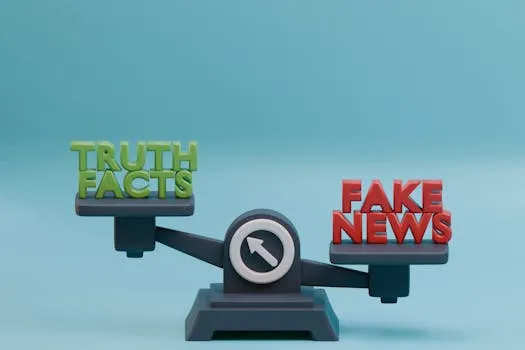
8. Why Is Honesty the Most Underestimated Trigger?
This is the trigger most stores underestimate. Sugarman, who sold hundreds of millions of dollars worth of products through direct response advertising, said honesty was his single most important discovery: "The more truthful and frank my ads were, the more the consumers responded."
What transparency looks like in ecommerce:
- Acknowledge product limitations: "This is not waterproof — it is water-resistant. Fine for rain, not for swimming."
- Show real customer photos alongside professional shots
- Be upfront about shipping times: "Ships from our warehouse in Selangor. Peninsular Malaysia: 2-3 days. Sabah/Sarawak: 5-7 days."
- Explain your pricing: If your product costs more than competitors, say why
Transparency feels risky. It is not. Customers who buy after seeing the honest version are more satisfied, leave better reviews, and return less product. That is how stores build sustainable conversion rates instead of chasing short-term tricks.
How Do You Use All 8 Triggers Together?
These eight triggers are not tactics to deploy one at a time. The best product pages use multiple triggers simultaneously:
- A product photo showing someone using it (mental ownership) with a caption that includes a review quote (social proof)
- A description that opens with the outcome (comfort/convenience) and includes technical detail (authority)
- A scarcity indicator that is real (fear of loss) next to a satisfaction guarantee (honesty)
The stores that convert at 3-4% instead of 1-2% are not doing anything exotic. They are doing these fundamentals consistently, on every page, for every product. For a step-by-step walkthrough of applying these principles to your PDPs, see our guide to optimising product pages for higher conversions. Need ready-made copy that uses these triggers? Grab our Product Description Examples & Swipe File — 200+ proven phrases organized by where they go on your store.
Frequently Asked Questions
Are psychological triggers the same as manipulation? No. These triggers describe how people naturally make decisions. Using them ethically means aligning your messaging with what your product genuinely delivers. Manipulation is promising something your product cannot do. Clarity is showing the real value in a way that resonates.
Which psychological trigger is most effective for ecommerce? Social proof consistently has the highest impact across categories. A product page with specific, verified reviews converts significantly better than one without — regardless of other optimisations. Start there if you can only focus on one trigger.
How do I use scarcity without being fake? Only display scarcity signals that reflect real inventory. "Only 3 left" works when there really are 3 left. Perpetual countdown timers and fake stock alerts erode trust and increase returns. Use genuine scarcity or skip it entirely.
Do these triggers work for high-ticket products? They work even more for high-ticket items. The higher the price, the more psychological resistance the buyer faces. Authority, social proof, and honesty become essential when someone is spending RM500 or more. Cheap products sell on convenience; expensive products sell on trust.
Keep Reading
Ready to grow?
Find out exactly where your store is leaking revenue.
Answer a quick set of multiple-choice questions and we'll pinpoint your biggest revenue leaks — and whether we can help plug them.
Find Your Revenue LeaksFree · No obligation · 2 minutes