Is your store leaking revenue?
Find out exactly where you're losing sales — takes 2 minutes.
A strategy framework for fashion ecommerce, built around merchandising clarity, not ad spend.
What Must a Real Fashion Strategy Solve?
A fashion marketing strategy in Malaysia must lead with conversion fixes (collection navigation, size guides, fit proof) before paid traffic. The reason ads first fails: no traffic source recovers a broken product page.
A fashion marketing strategy in Malaysia leads with conversion fixes before paid traffic. Collection navigation, size guides, fit proof. The reason ads first always fails is no traffic source can recover a broken product page; you just pay more for the same low conversion. Read the foundations guide first: How to Sell Fashion Products Online. Below is the conversion first framework, and you can baseline your store with the free scorecard.
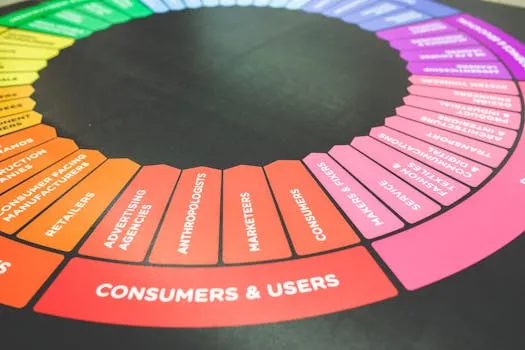
Your strategy must connect four layers into one system:
- Assortment and merchandising. Which products do you lead with? How are collections structured? What's your "hero" entry point that converts first-time buyers?
- Conversion architecture. Product pages, size confidence, trust signals, and checkout flow. This is the engine — channels just feed it traffic.
- Channel mix based on your economics. If your AOV is RM120 and margin is 50%, your max CAC is ~RM40. That determines which channels are viable.
- Retention and LTV. Fashion isn't a one-time purchase. The average fashion customer who buys a second time has a 3x higher lifetime value than a one-time buyer. New collections, restocks, and styling updates create natural repeat-purchase triggers.
With those four layers aligned, channel selection becomes straightforward.
How Should You Structure Channels and Funnels?
Fashion is visual and social. Your channel strategy should lean into that:
Social commerce (Instagram, TikTok):
- Fashion is aspirational — lead with lifestyle imagery and styling, not product specs.
- Short-form video: styling reels, "3 ways to wear this," and behind-the-scenes content.
- Influencer seeding with micro-influencers (5K-50K followers) who match your brand. Micro-influencers generate 3-5x higher engagement rates than macro-influencers in fashion — authenticity outperforms reach.
- Shoppable posts linking directly to product pages.
Organic search (SEO):
- Target intent-based keywords: "modest workwear Malaysia," "sustainable fashion Singapore," "affordable formal dresses KL."
- Collection pages optimised for category keywords drive sustained traffic.
- Style guide content ("What to wear to a Raya open house") captures seasonal intent and links to product pages.
Email and retention:
- New arrival alerts segmented by past purchase behaviour (if they bought dresses, show new dresses first)
- Back-in-stock notifications for wishlist and sold-out items
- Post-purchase styling suggestions: "You bought the navy blazer — here's how to style it 3 ways"
- VIP early access for repeat customers (drives loyalty and urgency)
Paid social (with discipline):
- Retarget product page and cart abandoners within 48 hours
- Lookalike audiences based on repeat purchasers (not just any buyer)
- Dynamic product ads showing items the user viewed
- Strict ROAS thresholds by product category — accessories may have different economics than outerwear
The priority order:
- Fix merchandising and conversion (the engine)
- Email and retention (cheapest revenue)
- Social content — organic first (brand building + traffic)
- Paid social (acquisition with guardrails)
- SEO (long-term compounding)
But fashion marketing in SEA has meaningful market-level differences. Here's where Malaysia and Singapore actually diverge.

How Do Malaysia and Singapore Differ in Execution?
| Factor | Malaysia | Singapore |
|---|---|---|
| Key seasons | Raya, CNY, Deepavali, year-end sales | CNY, National Day, year-end, Black Friday |
| Price sensitivity | Higher — promotions and value messaging convert | Lower — brand story and quality justify premium |
| Sizing awareness | Local size references help | International sizing more familiar |
| Delivery expectation | 3-5 days acceptable | Next-day expected |
| Returns culture | Lower return rate, less expectation of free returns | Higher return rate, free returns expected for conversion |
| Modest fashion | Significant market segment | Smaller but growing |
| Social platform preference | TikTok, Shopee Live growing fast | Instagram still strong, TikTok growing |
Strategy without a measurement cadence is just wishful thinking. Here's how to make it operational.
Does this sound like your store? Find out where you're leaking revenue — take the free Revenue Score. 3 minutes. Free. No pitch.
What Operating Cadence and KPIs Should You Follow?
Weekly:
- Conversion rate by collection and product
- Add-to-cart rate vs. purchase rate (gap = checkout friction)
- Return rate by product (fit issue signal)
- Social engagement on latest content
Monthly:
- Full funnel review: sessions → PDP views → add-to-cart → purchase
- AOV trend and bundle performance
- Email revenue as percentage of total (target: 25-35% — top fashion DTC brands hit 30%+)
- Customer acquisition cost by channel
Quarterly:
- Collection performance review: what sold, what didn't, why?
- Seasonal planning for next quarter's campaigns
- Size guide accuracy audit (correlate size chart with return data)
- Content and SEO performance — which pages drive traffic and convert?
The execution rhythm:
- Weeks 1-2: eliminate top conversion and merchandising blockers
- Weeks 3-6: strengthen product pages, size confidence, and collection flow
- Weeks 7-12: scale channels with strict conversion and CAC guardrails

How Do You Build Size Guides That Reduce Returns?
Most size guides are useless. Fashion returns in SEA run 15-25%, and the majority are sizing issues. A generic S/M/L chart with body measurements does nothing for a customer staring at two sizes on their phone at midnight.
We rebuild size guides for every fashion client we audit. The fix is specific.
Use actual garment measurements, not body measurements. A customer doesn't know their bust circumference. They do know that their favourite top measures 52cm across the chest laid flat. Give them that number for every SKU.
Show fit photos on 3+ body types. One model in one size tells the customer nothing about how the garment will look on them. Shoot the same piece on different frames. This is the single highest-impact change we see in fashion conversion — it builds fit confidence before the add-to-cart.
Add comparison notes. "Runs small — size up if you're between sizes." "Relaxed fit — take your usual size." These two-line notes eliminate the guesswork that causes returns.
Test your guide monthly. Pull return reason codes and track "wrong size" as a percentage. If it stays above 10%, your guide still needs work. We find most brands never check this — they launch a size chart once and forget it.
Not sure where your store's biggest leaks are? Run the free Shopify store score for a broader audit.
How Do You Handle Returns Without Bleeding Margin?
Returns are the cost of doing fashion online. Accept it, then optimize it.
In Malaysia: offer store credit as the default option, not a cash refund. We see 60% of customers accept store credit when it's presented first. You keep the revenue in the business and the customer comes back to spend it. Free returns are not expected here — charge a flat RM10 return fee or deduct it from the credit. Customers accept this.
In Singapore: free returns are table stakes on orders above SGD 80. Customers expect it, and your competitors offer it. Factor the cost into your pricing from day one rather than eating it as a surprise margin hit later.
Use a self-service returns portal. Loop or ReturnGO on Shopify let customers initiate returns without emailing your team. This cuts your support load by 40-60% on return-related tickets. The customer gets a label, ships it back, and the exchange or credit is processed automatically.
Track return rate by SKU. This is where most brands fail. They look at overall return rate but never drill into which products are driving it. If one SKU has 3x the return rate of your average, something is wrong — bad photos, misleading description, or a genuine fit problem. Fix the listing or kill the SKU. Carrying a high-return product costs you in shipping, handling, and customer trust.
What Is the Right Markdown and Collection Lifecycle Strategy?
Dead inventory kills fashion margins. Most brands in SEA hold onto slow-moving stock far too long, hoping it will sell at full price. It won't.
The markdown framework we use:
- Weeks 1-6 after launch: full price. This is your window for maximum margin. Promote hard during this period — email, social, homepage placement.
- Weeks 7-8: 20% off. Move it to a "New Markdowns" section. Send a targeted email to customers who viewed but didn't buy.
- Weeks 9-10: 40% off. This is your clearance push.
- Week 11+: 50% off or more. Get it out. The warehousing cost alone makes holding it irrational.
Never discount on the same page as full-price items. Create a dedicated "Last Chance" or "Final Sale" collection. Mixing discounted and full-price pieces on the same collection page trains customers to wait for markdowns. Keep the full-price experience clean.
Seasonal planning for SEA:
Malaysia doesn't have hard fashion seasons the way Western markets do. But three spikes are clear: Raya, CNY, and year-end. Plan capsule collections around these. Start production 12 weeks out, marketing 6 weeks out, and launch 3-4 weeks before the event.
Singapore follows Western seasons more closely — partly due to travel retail influence and a customer base that shops international brands. Spring/summer and fall/winter drops still resonate here, layered on top of CNY and National Day.
The brands that win at seasonal planning treat it as a calendar, not a reaction. We build 12-month collection calendars with every client during onboarding.
Where is your store losing margin? Run the free Revenue Score to find out. 3 minutes. Free. No pitch.
FAQ
Should we focus on Instagram or TikTok?
Both, but differently. Instagram for curated brand imagery and shoppable posts. TikTok for styling content and trend-driven discovery. Test both with small budgets and double down on what produces actual purchases — not just likes.
How do we handle seasonal inventory?
Plan 8-12 weeks ahead for festive collections. Use pre-order functionality for limited releases. After the season, run flash sales to clear inventory rather than letting it sit.
When is the right time to scale paid acquisition?
After your conversion rate is stable, size-related returns are under control, and your AOV supports your target CAC. Scaling before this just scales waste.
Keep reading:
- How to Sell Fashion Products Online — The foundations guide: merchandising, fit confidence, and conversion fixes.
- Fashion & Apparel Ecommerce — The full industry hub for fashion ecommerce in Malaysia and Singapore.
- Ecommerce Agency Malaysia — Full-service ecommerce support from launch through ongoing optimisation.
- Ecommerce Agency Singapore — Shopify agency for DTC brands in Singapore.
WebMedic helps fashion brands build, launch, and grow on Shopify. Get your free store score →

Free Download
23 things your top competitor's store has that yours doesn't.
"I look at their store and it just looks better. We get the traffic — something's clearly off." Here are the 23 specific things they're doing.
Benchmarked across 20+ Shopify stores in beauty, fashion, food & beverage. Half the gaps close in under a week.
PDF in your inbox in 30 seconds. 1 email. No follow-up unless you ask.